

No products in the cart.
 All Categories
Description
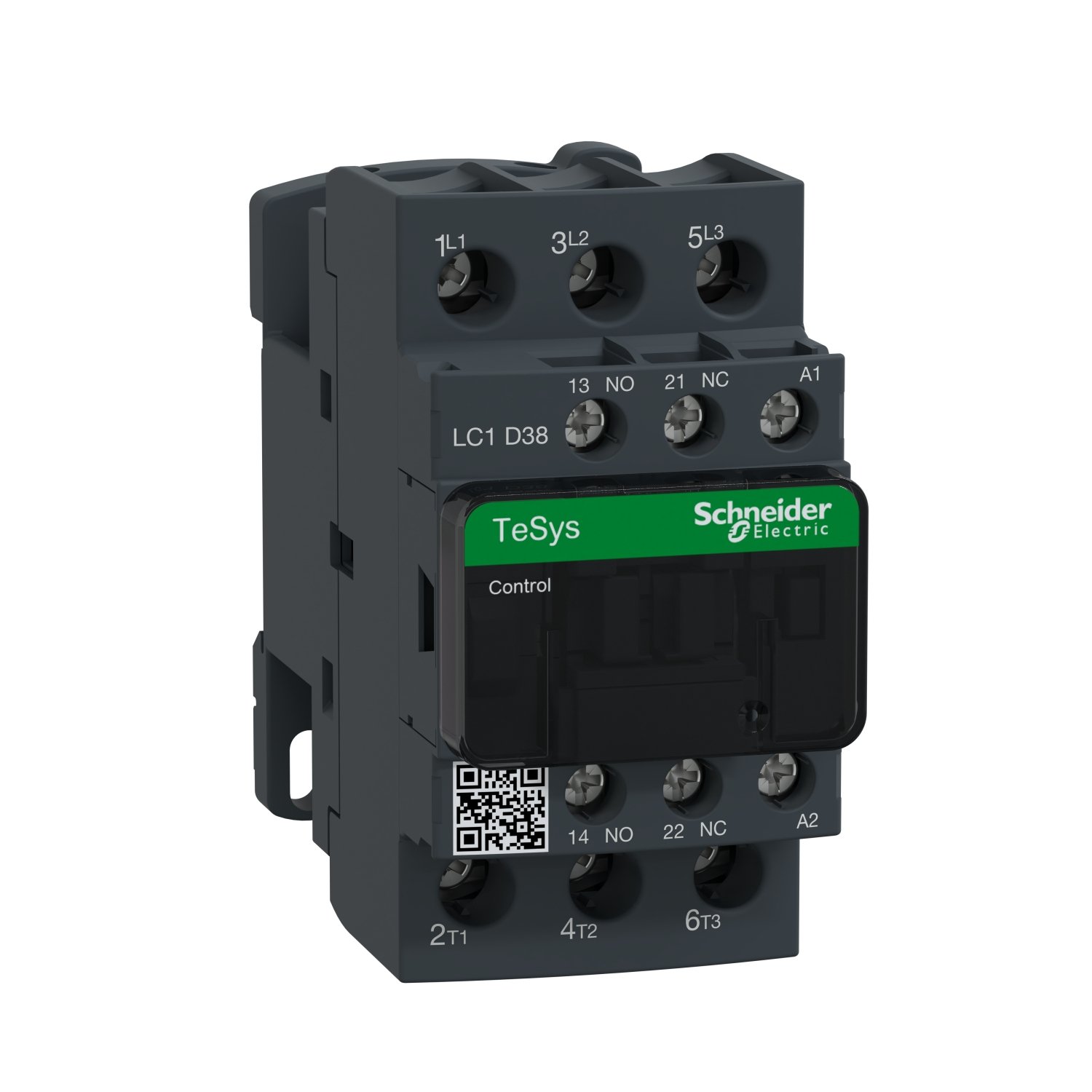
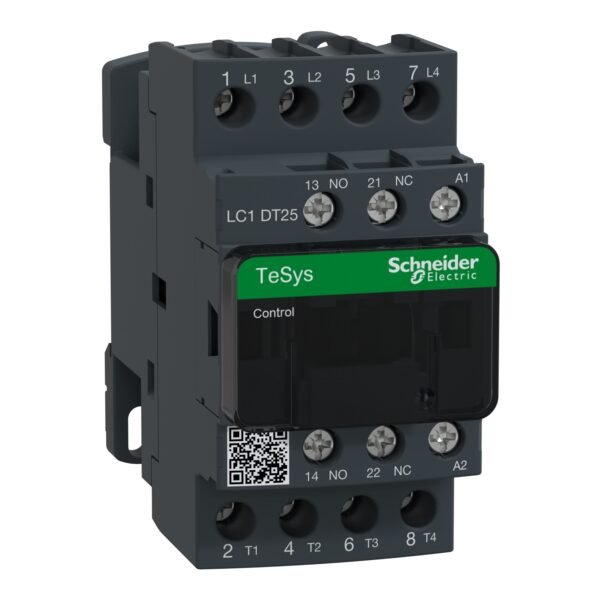
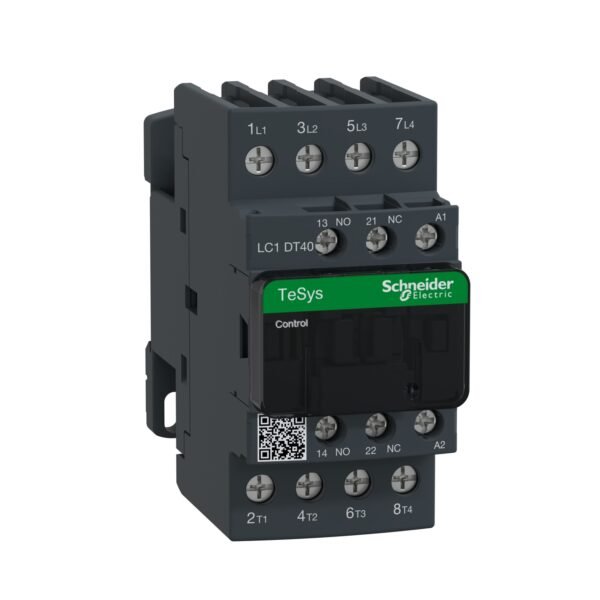
Schneider LC1D38E7 Contactor: Enhancing Electrical Systems
Contactors play a crucial role in the operation of various electrical systems, ensuring efficient control and management of power circuits. Among the myriad of contactors available in the market, it stands out for its exceptional performance and reliability. In this article, we delve into the features, applications, advantages, installation guide, maintenance tips, and more, to provide a comprehensive overview of it.
Features of Schneider LC1D38E7 Contactor
it boasts a range of features that make it an ideal choice for diverse applications. With a high capacity and ratings, it can handle heavy loads effortlessly. Available in various coil voltage options, it offers flexibility in installation. The contact material ensures low wear and tear, enhancing longevity. Despite its robust performance, its compact design makes it easy to integrate into different systems seamlessly.
Applications of Schneider LC1D38E7 Contactor
From industrial machinery to HVAC systems, motor control to lighting systems, it finds wide-ranging applications across industries. Its versatility and reliability make it a preferred choice for controlling and switching electrical circuits in diverse settings.
Advantages of Using Schneider LC1D38E7 Contactor
One of the primary advantages of it is its reliability. It ensures uninterrupted operation, minimizing downtime and enhancing productivity. With a durable design, it can withstand harsh operating conditions, offering long-term performance. Additionally, its ease of installation and compatibility with various systems make it a convenient choice for engineers and technicians.
Installation Guide
Installing it is a straightforward process, provided proper precautions are taken. It is essential to follow the manufacturer’s guidelines and adhere to safety protocols to ensure a secure installation. Detailed instructions, including wiring diagrams and mounting procedures, are provided in the product manual.
Maintenance Tips
To ensure optimal performance and longevity of it, regular maintenance is essential. This includes periodic inspection for signs of wear or damage, cleaning of contacts, and timely replacement of worn-out components. Following the recommended maintenance schedule helps prevent unexpected failures and ensures the continued operation of electrical systems.
Comparison with Alternatives
When compared to other contactor models available in the market, it offers several advantages. Its robust construction, high reliability, and compatibility with a wide range of applications set it apart from its competitors. While there may be alternatives with similar features, the Schneider LC1D38E7 excels in terms of performance and durability.
Customer Reviews
Feedback from users who have installed and used it provides valuable insights into its performance and reliability. Many users commend its sturdy build quality, ease of installation, and consistent operation. Positive reviews highlight its ability to handle heavy loads without faltering, making it a trusted component in electrical systems.
Common Issues and Troubleshooting
Despite its exceptional performance, users may encounter occasional issues with the Schneider LC1D38E7 contactor. Common problems include overheating, contact welding, and coil failure. However, these issues can be easily addressed with proper troubleshooting techniques outlined in the product manual.
Conclusion
The Schneider LC1D38E7 contactor emerges as a reliable and efficient solution for controlling and switching electrical circuits in various applications. With its robust construction, versatile functionality, and user-friendly design, it offers unmatched performance and durability. Whether in industrial settings or commercial establishments, the Schneider LC1D38E7 contactor proves to be an indispensable component in enhancing electrical systems.
Additional information
| brands | Schneider Electric |
|---|
Specifications
| Range | TeSys TeSys Deca |
|---|---|
| Range of product | TeSys Deca |
| Product or component type | Contactor |
| Device short name | LC1D |
| Contactor application | Motor control Resistive load |
| Utilisation category | AC-4 AC-1 AC-3 AC-3e |
| Poles description | 3P |
| [Ue] rated operational voltage | Power circuit: <= 690 V AC 25...400 Hz Power circuit: <= 300 V DC |
| [Ie] rated operational current | 50 A (at <60 °C) at <= 440 V AC AC-1 for power circuit 38 A (at <60 °C) at <= 440 V AC AC-3 for power circuit 38 A (at <60 °C) at <= 440 V AC AC-3e for power circuit |
| [Uc] control circuit voltage | 48 V AC 50/60 Hz |
| Motor power kW | 18.5 kW at 500 V AC 50/60 Hz (AC-3) 18.5 kW at 660...690 V AC 50/60 Hz (AC-3) 7.5 kW at 400 V AC 50/60 Hz (AC-4) 18.5 kW at 380...400 V AC 50/60 Hz (AC-3) 9 kW at 220...230 V AC 50/60 Hz (AC-3) 18.5 kW at 415...440 V AC 50/60 Hz (AC-3) 18.5 kW at 500 V AC 50/60 Hz (AC-3e) 18.5 kW at 660...690 V AC 50/60 Hz (AC-3e) 18.5 kW at 380...400 V AC 50/60 Hz (AC-3e) 9 kW at 220...230 V AC 50/60 Hz (AC-3e) 18.5 kW at 415...440 V AC 50/60 Hz (AC-3e) |
|---|---|
| Motor power hp | 10 hp at 230/240 V AC 50/60 Hz for 3 phases motors 10 hp at 200/208 V AC 50/60 Hz for 3 phases motors 5 hp at 240 V AC 50/60 Hz for 1 phase motors 20 hp at 480 V AC 50/60 Hz for 3 phases motors 25 hp at 600 V AC 50/60 Hz for 3 phases motors |
| Compatibility code | LC1D |
| Pole contact composition | 3 NO |
| Protective cover | With |
| [Ith] conventional free air thermal current | 10 A (at 60 °C) for signalling circuit 50 A (at 60 °C) for power circuit |
| Irms rated making capacity | 140 A AC for signalling circuit conforming to IEC 60947-5-1 250 A DC for signalling circuit conforming to IEC 60947-5-1 550 A at 440 V for power circuit conforming to IEC 60947 |
| Rated breaking capacity | 550 A at 440 V for power circuit conforming to IEC 60947 |
| [Icw] rated short-time withstand current | 60 A 40 °C - 10 min for power circuit 430 A 40 °C - 1 s for power circuit 150 A 40 °C - 1 min for power circuit 310 A 40 °C - 10 s for power circuit 100 A - 1 s for signalling circuit 120 A - 500 ms for signalling circuit 140 A - 100 ms for signalling circuit |
| Associated fuse rating | 10 A gG for signalling circuit conforming to IEC 60947-5-1 63 A gG at <= 690 V coordination type 1 for power circuit 63 A gG at <= 690 V coordination type 2 for power circuit |
| Average impedance | 2 mOhm - Ith 50 A 50 Hz for power circuit |
| Power dissipation per pole | 5 W AC-1 3 W AC-3 3 W AC-3e |
| [Ui] rated insulation voltage | Power circuit: 600 V CSA certified Power circuit: 600 V UL certified Signalling circuit: 690 V conforming to IEC 60947-1 Signalling circuit: 600 V CSA certified Signalling circuit: 600 V UL certified Power circuit: 690 V conforming to IEC 60947-4-1 |
| Overvoltage category | III |
| Pollution degree | 3 |
| [Uimp] rated impulse withstand voltage | 6 kV conforming to IEC 60947 |
| Safety reliability level | B10d = 1369863 cycles contactor with nominal load conforming to EN/ISO 13849-1 B10d = 20000000 cycles contactor with mechanical load conforming to EN/ISO 13849-1 |
| Mechanical durability | 15 Mcycles |
| Electrical durability | 1.4 Mcycles 50 A AC-1 at Ue <= 440 V 1.4 Mcycles 38 A AC-3 at Ue <= 440 V 1.4 Mcycles 38 A AC-3e at Ue <= 440 V |
| Control circuit type | AC at 50/60 Hz |
| Coil technology | Without built-in suppressor module |
| Control circuit voltage limits | 0.3...0.6 Uc (-40…70 °C):drop-out AC 50/60 Hz 0.8...1.1 Uc (-40…60 °C):operational AC 50 Hz 0.85...1.1 Uc (-40…60 °C):operational AC 60 Hz 1...1.1 Uc (60…70 °C):operational AC 50/60 Hz |
| Inrush power in VA | 70 VA 60 Hz cos phi 0.75 (at 20 °C) 70 VA 50 Hz cos phi 0.75 (at 20 °C) |
| Hold-in power consumption in VA | 7.5 VA 60 Hz cos phi 0.3 (at 20 °C) 7 VA 50 Hz cos phi 0.3 (at 20 °C) |
| Heat dissipation | 2…3 W at 50/60 Hz |
| Operating time | 4...19 ms opening 12...22 ms closing |
| Maximum operating rate | 3600 cyc/h 60 °C |
| Maximum operating rate | 3600 cyc/h at 60 °C |
| Connections - terminals | Control circuit: screw clamp terminals 2 1…2.5 mm² - cable stiffness: flexible with cable end Control circuit: screw clamp terminals 1 1…4 mm² - cable stiffness: flexible without cable end Control circuit: screw clamp terminals 2 1…4 mm² - cable stiffness: flexible without cable end Control circuit: screw clamp terminals 1 1…4 mm² - cable stiffness: flexible with cable end Control circuit: screw clamp terminals 1 1…4 mm² - cable stiffness: solid without cable end Control circuit: screw clamp terminals 2 1…4 mm² - cable stiffness: solid without cable end Power circuit: screw clamp terminals 1 2.5…10 mm² - cable stiffness: flexible without cable end Power circuit: screw clamp terminals 2 2.5…10 mm² - cable stiffness: flexible without cable end Power circuit: screw clamp terminals 1 1…10 mm² - cable stiffness: flexible with cable end Power circuit: screw clamp terminals 2 1.5…6 mm² - cable stiffness: flexible with cable end Power circuit: screw clamp terminals 1 1.5…10 mm² - cable stiffness: solid without cable end Power circuit: screw clamp terminals 2 2.5…10 mm² - cable stiffness: solid without cable end |
| Tightening torque | Control circuit: 1.7 N.m - on screw clamp terminals - with screwdriver flat Ø 6 mm Control circuit: 1.7 N.m - on screw clamp terminals - with screwdriver Philips No 2 Power circuit: 2.5 N.m - on screw clamp terminals - with screwdriver flat Ø 6 mm Power circuit: 2.5 N.m - on screw clamp terminals - with screwdriver Philips No 2 Control circuit: 1.7 N.m - on screw clamp terminals - with screwdriver pozidriv No 2 Power circuit: 2.5 N.m - on screw clamp terminals - with screwdriver pozidriv No 2 |
| Auxiliary contact composition | 1 NO + 1 NC |
| Auxiliary contacts type | type mechanically linked 1 NO + 1 NC conforming to IEC 60947-5-1 type mirror contact 1 NC conforming to IEC 60947-4-1 |
| Signalling circuit frequency | 25...400 Hz |
| Minimum switching voltage | 17 V for signalling circuit |
| Minimum switching current | 5 mA for signalling circuit |
| Insulation resistance | > 10 MOhm for signalling circuit |
| Non-overlap time | 1.5 ms on de-energisation between NC and NO contact 1.5 ms on energisation between NC and NO contact |
| Mounting support | Plate Rail |
| Standards | CSA C22.2 No 14 EN 60947-4-1 EN 60947-5-1 IEC 60947-4-1 IEC 60947-5-1 UL 60947-4-1 IEC 60335-1:Clause 30.2 IEC 60335-2-40:Annex JJ UL 60335-2-40:Annex JJ CSA C22.2 No 60947-4-1 |
|---|---|
| Product certifications | UL CCC CSA Marine UKCA EAC CB Scheme |
| IP degree of protection | IP20 front face conforming to IEC 60529 |
| Protective treatment | TH conforming to IEC 60068-2-30 |
| Climatic withstand | conforming to IACS E10 exposure to damp heat conforming to IEC 60947-1 Annex Q category D exposure to damp heat |
| Permissible ambient air temperature around the device | -40…60 °C 60…70 °C with derating |
| Operating altitude | 0...3000 m |
| Fire resistance | 850 °C conforming to IEC 60695-2-1 |
| Flame retardance | V1 conforming to UL 94 |
| Mechanical robustness | Vibrations contactor open (2 Gn, 5...300 Hz) Vibrations contactor closed (4 Gn, 5...300 Hz) Shocks contactor closed (15 Gn for 11 ms) Shocks contactor open (8 Gn for 11 ms) |
| Height | 85 mm |
| Width | 45 mm |
| Depth | 92 mm |
| Net weight | 0.38 kg |
| Unit Type of Package 1 | PCE |
|---|---|
| Number of Units in Package 1 | 1 |
| Package 1 Height | 5.000 cm |
| Package 1 Width | 9.200 cm |
| Package 1 Length | 11.200 cm |
| Package 1 Weight | 420.000 g |
| Unit Type of Package 2 | S02 |
| Number of Units in Package 2 | 20 |
| Package 2 Height | 15.000 cm |
| Package 2 Width | 30.000 cm |
| Package 2 Length | 40.000 cm |
| Package 2 Weight | 8.716 kg |
| Warranty | 18 months |
|---|


Reviews
There are no reviews yet.