

No products in the cart.
 All Categories
-46%On Sale
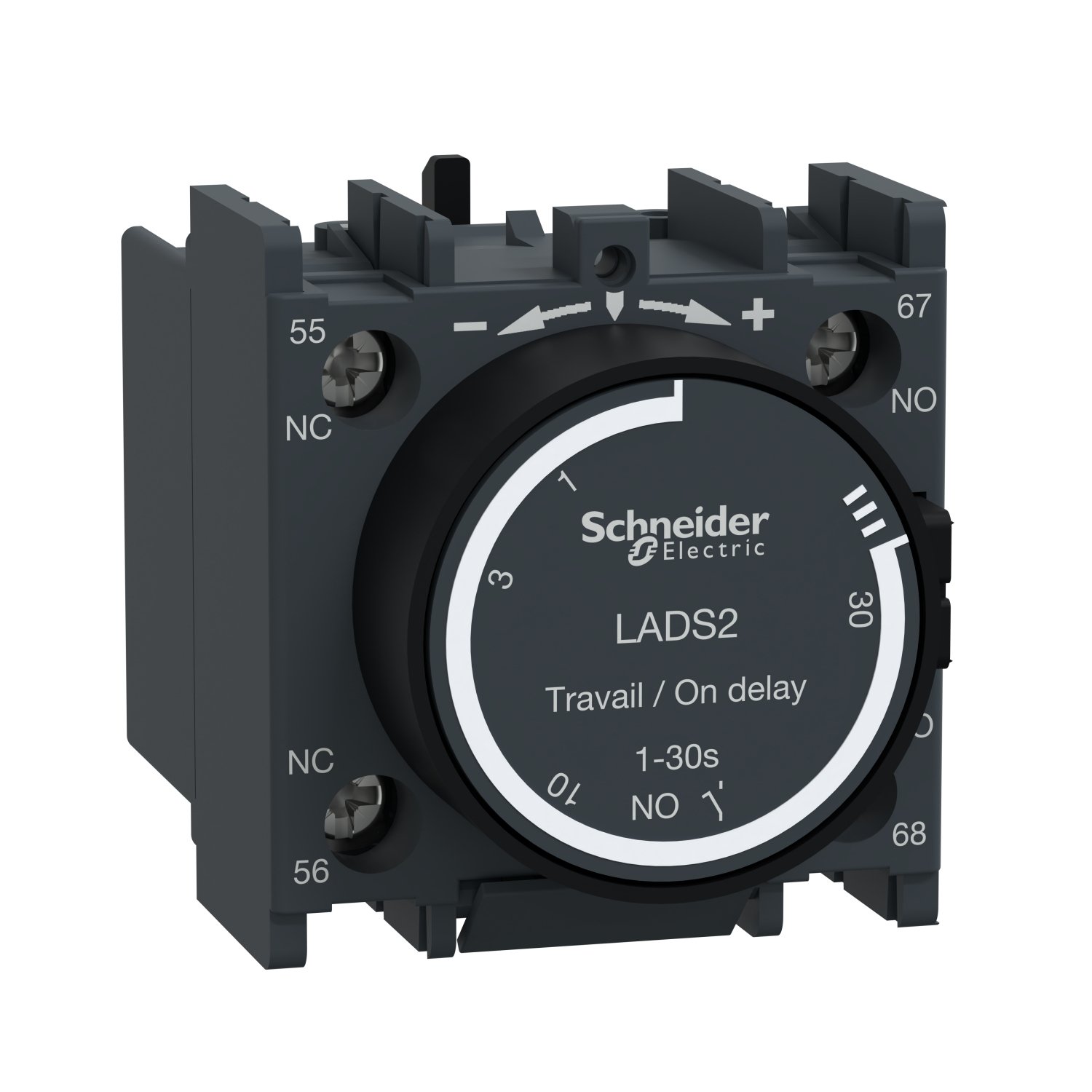
Schneider LADS2 | Time delay auxiliary contact block, TeSys D, 1NO + 1NC, on delay 1-30 s, front mounting, screw terminals
Schneider LADS2
Original price was: EGP 60,464.00.EGP 32,651.00Current price is: EGP 32,651.00.
Description
Schneider LADS2 TeSys
: Revolutionizing Automation
In today’s fast-paced world, automation has become a cornerstone of efficiency and productivity across various industries. Among the leading innovators in this field, Schneider Electric stands out with its cutting-edge products, including it. This article explores the features, advantages, installation process, maintenance tips, and more about the Schneider LADS2.
History and Background
Schneider Electric has been a key player in the automation industry for decades. The development of the Schneider LADS2 is a testament to their commitment to providing advanced solutions for businesses seeking streamlined operations. With a focus on reliability, durability, and innovation, Schneider Electric has earned the trust of customers worldwide.
Features
Compact Design
One of the standout features of it is its compact design. Despite its small size, this device packs a powerful punch, making it ideal for installations where space is limited. Whether it’s a small-scale operation or a large industrial facility, it fits seamlessly into any environment.
Versatile Applications
The versatility of it sets it apart from other automation solutions on the market. From simple control tasks to complex operations, this device can handle a wide range of applications with ease. Whether it’s monitoring, switching, or regulating processes, the Schneider LADS2 delivers reliable performance every time.
Advantages of Using Schneider LADS2
Efficiency and Productivity
By automating repetitive tasks and streamlining workflows, the Schneider LADS2 helps businesses boost efficiency and productivity. With faster response times and fewer errors, employees can focus on more strategic initiatives, driving overall growth and success.
Cost-effectiveness
Investing in the Schneider LADS2 offers long-term cost savings for businesses. By reducing manual labor and minimizing downtime, this device helps optimize resources and maximize profitability. Additionally, its durable construction ensures minimal maintenance requirements, further lowering operational costs.
Installation and Setup Process
Installing it is a straightforward process that can be completed in a few simple steps. Begin by carefully reviewing the user manual and safety guidelines provided by Schneider Electric. Then, follow these steps to ensure a successful installation:
Step-by-Step Guide
- Identify the appropriate location for mounting the Schneider LADS2.
- Ensure proper power supply and connectivity options are available.
- Mount the device securely using the provided hardware.
- Connect the necessary cables and peripherals according to the instructions.
- Power on the Schneider LADS2 and follow the on-screen prompts for initial setup.
Common Challenges and Solutions
While the installation process is relatively straightforward, some common challenges may arise. These could include compatibility issues, wiring errors, or connectivity issues. In such cases, refer to the troubleshooting section of the user manual or contact Schneider Electric support for assistance.
Maintenance and Troubleshooting
To ensure optimal performance and longevity of the Schneider LADS2, regular maintenance is essential. Follow these tips to keep your device in top condition:
Regular Maintenance Tips
- Clean the exterior of the device regularly to prevent dust buildup.
- Check for loose connections or damaged cables and replace them as needed.
- Perform software updates as recommended by Schneider Electric to access new features and improvements.
Dealing with Common Issues
If you encounter any issues with your Schneider LADS2, don’t panic. Many common problems can be resolved with simple troubleshooting steps. Refer to the user manual or online resources for guidance, and if necessary, contact Schneider Electric support for assistance.
Customer Reviews and Testimonials
Customers worldwide have praised it for its reliability, performance, and ease of use. From small businesses to large enterprises, users appreciate the impact this device has had on their operations. Positive reviews highlight its versatility, durability, and cost-effectiveness, making it a top choice for automation needs.
Comparisons with Similar Products
When compared to similar products on the market, the Schneider LADS2 stands out for its superior performance, reliability, and versatility. While other automation solutions may offer similar features, few can match the overall value proposition of the Schneider LADS2.
Industries Benefiting from Schneider LADS2
The Schneider LADS2 has found widespread adoption across various industries, including manufacturing, healthcare, energy, and more. Its versatility and reliability make it well-suited for a wide range of applications, from simple control tasks to complex automation processes.
Future Developments and Upgrades
As technology continues to evolve, Schneider Electric remains committed to innovation and continuous improvement. Future developments and upgrades for the Schneider LADS2 are in the pipeline, promising even greater efficiency, performance, and functionality for users.
Conclusion
In conclusion, the Schneider LADS2 is a game-changer in the world of automation, offering unmatched performance, reliability, and versatility. From its compact design to its advanced features, this device is revolutionizing the way businesses operate. Whether you’re a small business owner or a large enterprise, investing in the Schneider LADS2 can help you streamline operations, boost productivity, and drive growth.
Additional information
| brands | Schneider Electric |
|---|
Specifications
| Range | TeSys TeSys Deca |
|---|---|
| Product name | TeSys Deca |
| Product or component type | Time delay auxiliary contact block |
| Range compatibility | TeSys Deca CAD TeSys Deca LC1D TeSys F LC1F TeSys F CR1F |
| device application | Star delta starter |
| Mounting location | Front |
| Pole contact composition | 1 NO + 1 NC |
| Contacts operation | Time delay |
| Timer type | On delay |
| Time delay range | 1...30 s |
| [Ue] rated operational voltage | 690 V AC 25...400 Hz |
| [Ie] rated operational current | 6 A at 120 V AC-15 1.04 A at 690 V AC-15 0.55 A at 125 V DC-13 0.1 A at 600 V DC-13 |
| [Ui] rated insulation voltage | 690 V conforming to IEC 60947-5-1 600 V conforming to UL 60947-5-1 600 V conforming to CSA C22.2 No 60947-5-1 |
| [Ith] conventional free air thermal current | 10 A (at 60 °C) |
| Standards | EN/IEC 60947-5-1 UL 60947-5-1 CSA C22.2 No 60947-5-1 GB/T 14048.5 EN 50012 IEC 60335-1:Clause 30.2 IEC 60335-2-40:Annex JJ UL 60335-2-40:Annex JJ |
| Product certifications | IECEE CB Scheme UL CSA CCC EAC UKCA |
| Irms rated making capacity | 140 A at <= 690 V AC conforming to IEC 60947-5-1 250 A at <= 690 V DC conforming to IEC 60947-5-1 |
|---|---|
| Permissible short-time rating | 100 A 60 °C 1 s 120 A 60 °C 500 ms 140 A 60 °C 100 ms |
| Protection type | GG fuse 10 A |
| Mechanical durability | 5 Mcycles |
| Minimum switching current | 5 mA |
| Minimum switching voltage | 17 V |
| Non-overlap time | 1.5 ms on de-energisation no overlap between NC and NO contact 1.5 ms on energisation no overlap between NC and NO contact |
| Insulation resistance | > 10 MOhm |
| Connections - terminals | Screw clamp terminals 1 cable(s) 1…2.5 mm²flexible with cable end Screw clamp terminals 1 cable(s) 1…2.5 mm²flexible without cable end Screw clamp terminals 2 cable(s) 1…2.5 mm²flexible with cable end Screw clamp terminals 2 cable(s) 1…2.5 mm²flexible without cable end Screw clamp terminals 1 cable(s) 1…2.5 mm²rigid Screw clamp terminals 2 cable(s) 1…2.5 mm²rigid Screw clamp terminals |
| Tightening torque | 1.7 N.m - with screwdriver flat Ø 6 mm 1.7 N.m - with screwdriver Philips No 2 1.7 N.m - with screwdriver pozidriv No 2 |
| Height | 48 mm |
| Width | 44 mm |
| Depth | 61 mm |
| Colour | Dark grey |
| Environmental characteristic | Normal environment |
|---|---|
| IP degree of protection | IP20 conforming to IEC 60529 |
| Protective treatment | TH conforming to IEC 60068 |
| Ambient air temperature for storage | -60…80 °C |
| Ambient air temperature for operation | -40…70 °C |
| Operating altitude | 3000 m |
| Unit Type of Package 1 | PCE |
|---|---|
| Number of Units in Package 1 | 1 |
| Package 1 Height | 5.2 cm |
| Package 1 Width | 6.5 cm |
| Package 1 Length | 4.8 cm |
| Package 1 Weight | 82 g |
| Unit Type of Package 2 | BB1 |
| Number of Units in Package 2 | 10 |
| Package 2 Height | 5.2 cm |
| Package 2 Width | 13 cm |
| Package 2 Length | 24 cm |
| Package 2 Weight | 836 g |
| Unit Type of Package 3 | S03 |
| Number of Units in Package 3 | 140 |
| Package 3 Height | 30 cm |
| Package 3 Width | 30 cm |
| Package 3 Length | 40 cm |
| Package 3 Weight | 12.202 kg |
| Warranty | 18 |
|---|


Reviews
There are no reviews yet.