

No products in the cart.
 All Categories
Description
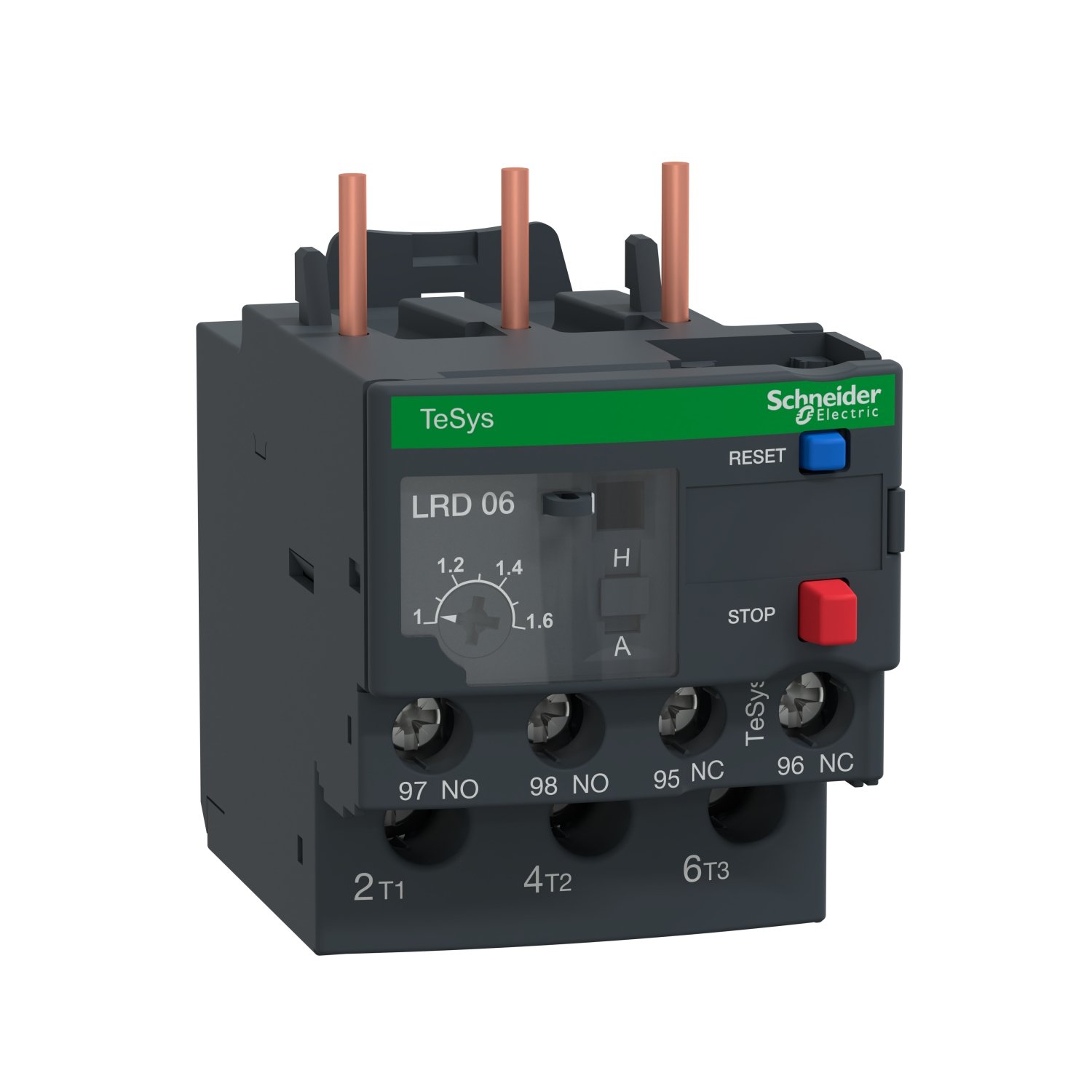
Schneider LRD06 | TeSys LRD thermal overload relays – 1…1.6 A – class 10A
Schneider LRD06: A Comprehensive Description
Schneider Electric is renowned for its innovative solutions in the field of electrical equipment, and the Schneider LRD06 is no exception. This article will delve into the features, applications, installation guide, maintenance tips, troubleshooting, and more concerning this remarkable product.
Overview of Schneider LRD06
The Schneider LRD06 is a thermal overload relay designed to protect electrical circuits from damage caused by overloads and phase failures. With its compact design and robust construction, it offers reliable protection for a variety of applications across industrial, commercial, and residential settings.
Specifications
The LRD06 features a wide range of specifications, including adjustable current settings, a trip class, and compatibility with various types of contactors. Its advanced thermal sensing technology ensures accurate and timely response to overloads, preventing costly downtime and equipment damage.
Design and Build
Crafted with precision engineering, the Schneider LRD06 boasts a durable construction that can withstand harsh operating conditions. Its compact size makes it easy to install in tight spaces, while its user-friendly interface simplifies configuration and monitoring.
Applications of Schneider LRD06
The versatility of the Schneider LRD06 makes it suitable for a wide range of applications, including:
- Industrial Use: From manufacturing plants to oil refineries, the LRD06 provides essential protection for critical machinery and equipment.
- Commercial Use: Office buildings, shopping malls, and other commercial facilities rely on the LRD06 to safeguard their electrical systems and ensure uninterrupted operations.
- Residential Use: In homes and apartments, the LRD06 protects appliances and electrical circuits from overload conditions, enhancing safety and peace of mind for residents.
Installation Guide
Installing the Schneider LRD06 is a straightforward process, but it requires careful attention to detail to ensure proper functionality and safety.
Step-by-step Installation Process
- Turn off power: Before beginning installation, disconnect power to the circuit where the LRD06 will be installed to prevent electrical shock.
- Mount the relay: Securely mount the LRD06 to a suitable surface using screws or mounting brackets.
- Connect wiring: Follow the wiring diagram provided in the product manual to connect the LRD06 to the electrical circuit.
- Adjust settings: Set the desired current rating and trip class according to the requirements of the application.
- Test functionality: After installation, test the functionality of the LRD06 by simulating overload conditions and verifying that it trips as expected.
Safety Precautions
- Always wear appropriate personal protective equipment (PPE) when working with electrical equipment.
- Ensure that the LRD06 is installed in accordance with local electrical codes and regulations.
- Regularly inspect the LRD06 for signs of damage or wear and replace it if necessary.
Maintenance Tips
Proper maintenance is essential to ensure the continued reliability and performance of the Schneider LRD06.
Regular Inspections
- Inspect the LRD06 periodically for loose connections, corrosion, or other signs of damage.
- Clean the exterior of the relay regularly to remove dust and debris that could impair its operation.
Troubleshooting Common Issues
Despite its reliability, the Schneider LRD06 may encounter occasional issues that require troubleshooting.
Overheating
If the LRD06 is overheating, check for blocked ventilation openings or excessive ambient temperatures. Ensure that the relay is adequately sized for the load it is protecting.
Malfunctioning
If the LRD06 is malfunctioning or failing to trip during overload conditions, check for loose connections, damaged components, or incorrect settings. Consult the product manual for troubleshooting guidance.
Comparison with Similar Products
While there are many thermal overload relays on the market, the Schneider LRD06 stands out for its superior performance and reliability.
Advantages of Schneider LRD06
- Wide range of adjustable current settings
- Compact and durable design
- Easy installation and configuration
- Compatibility with various contactors and electrical systems
Differences from Competitors
- Higher accuracy and faster response time
- Enhanced protection features
- Extensive warranty and customer support options
Customer Reviews
Customer feedback is overwhelmingly positive, with many users praising the reliability and performance of the Schneider LRD06.
Positive Feedback
- “Easy to install and configure.”
- “Provides excellent protection for our equipment.”
- “Reliable performance in demanding conditions.”
Negative Feedback
- “Occasional false trips during startup.”
- “Limited compatibility with certain contactors.”
- “Pricey compared to other options on the market.”
Pricing and Availability
The Schneider LRD06 is competitively priced and widely available from authorized distributors and retailers worldwide. Pricing may vary depending on the specific configuration and quantity purchased.
Conclusion
In conclusion, the Schneider LRD06 is a versatile and reliable thermal overload relay that offers superior protection for electrical circuits in a variety of applications. With its advanced features, durable construction, and user-friendly design, it is an essential component of any modern electrical system.
Additional information
| brands | Schneider Electric |
|---|
Specifications
| Range | TeSys TeSys Deca |
|---|---|
| Product name | TeSys LRD TeSys Deca |
| Product or component type | Differential thermal overload relay |
| Device short name | LRD |
| Relay application | Motor protection |
| Product compatibility | LC1D25 LC1D32 LC1D12 LC1D18 LC1D38 LC1D09 |
| Network type | DC AC |
| Thermal overload class | Class 10A conforming to IEC 60947-4-1 |
| Thermal protection adjustment range | 1…1.6 A |
| [Ui] rated insulation voltage | Power circuit: 600 V conforming to CSA Power circuit: 600 V conforming to UL Power circuit: 690 V conforming to IEC 60947-4-1 |
| Network frequency | 0...400 Hz |
|---|---|
| Mounting support | Plate, with specific accessories Rail, with specific accessories Under contactor |
| Tripping threshold | 1.14 +/- 0.06 Ir conforming to IEC 60947-4-1 |
| Auxiliary contact composition | 1 NO + 1 NC |
| [Ith] conventional free air thermal current | 5 A for signalling circuit |
| Permissible current | 3 A at 120 V AC-15 for signalling circuit 0.22 A at 125 V DC-13 for signalling circuit |
| [Ue] rated operational voltage | 690 V AC 0...400 Hz for power circuit conforming to IEC 60947-4-1 |
| Associated fuse rating | 4 A gG for signalling circuit 4 A BS for signalling circuit |
| [Uimp] rated impulse withstand voltage | 6 kV |
| Phase failure sensitivity | Tripping current 130 % of Ir on two phase, the last one at 0 |
| Control type | Red push-button: stop Blue push-button: reset |
| Temperature compensation | -20…60 °C |
| Connections - terminals | Control circuit: screw clamp terminals 2 cable(s) 1…2.5 mm² flexible without cable end Control circuit: screw clamp terminals 2 cable(s) 1…2.5 mm² flexible with cable end Control circuit: screw clamp terminals 2 cable(s) 1…2.5 mm² solid without cable end Power circuit: screw clamp terminals 1 cable(s) 1.5…10 mm² flexible without cable end Power circuit: screw clamp terminals 1 cable(s) 1…4 mm² flexible with cable end Power circuit: screw clamp terminals 1 cable(s) 1…6 mm² solid without cable end |
| Tightening torque | Control circuit: 1.7 N.m - on screw clamp terminals Power circuit: 1.7 N.m - on screw clamp terminals |
| Height | 66 mm |
| Width | 45 mm |
| Depth | 70 mm |
| Net weight | 0.124 kg |
| Climatic withstand | conforming to IACS E10 |
|---|---|
| IP degree of protection | IP20 conforming to IEC 60529 |
| Ambient air temperature for operation | -20…60 °C without derating conforming to IEC 60947-4-1 |
| Ambient air temperature for storage | -60…70 °C |
| Flame retardance | V1 conforming to UL 94 |
| Mechanical robustness | Vibrations: 6 Gn conforming to IEC 60068-2-6 Shocks: 15 Gn for 11 ms conforming to IEC 60068-2-7 |
| Dielectric strength | 1.89 kV at 50 Hz conforming to IEC 60947-1 |
| Standards | EN/IEC 60947-4-1 EN/IEC 60947-5-1 UL 60947-4-1 UL 60947-5-1 CSA C22.2 No 60947-4-1 CSA C22.2 No 60947-5-1 GB/T 14048.4 GB/T 14048.5 EN 50495 |
| Product certifications | IEC UL CSA CCC EAC BV RINA DNV-GL LROS (Lloyds register of shipping) ATEX INERIS UKCA |
| Unit Type of Package 1 | PCE |
|---|---|
| Number of Units in Package 1 | 1 |
| Package 1 Height | 4.900 cm |
| Package 1 Width | 7.700 cm |
| Package 1 Length | 8.800 cm |
| Package 1 Weight | 141.900 g |
| Unit Type of Package 2 | S02 |
| Number of Units in Package 2 | 24 |
| Package 2 Height | 15.000 cm |
| Package 2 Width | 30.000 cm |
| Package 2 Length | 40.000 cm |
| Package 2 Weight | 3.649 kg |
| Warranty | 18 months |
|---|


Reviews
There are no reviews yet.