

No products in the cart.
 All Categories
-45%On Sale
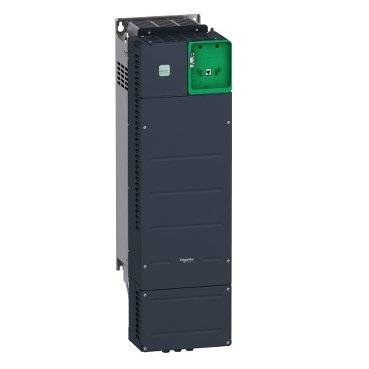
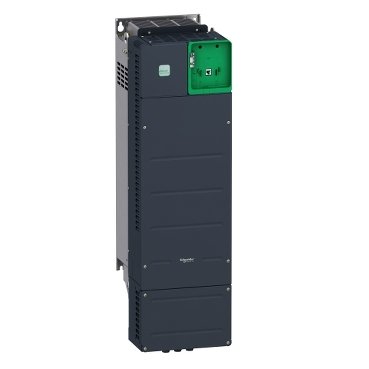
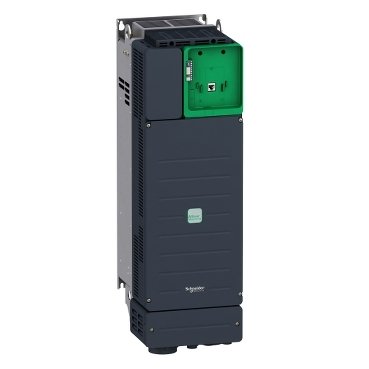
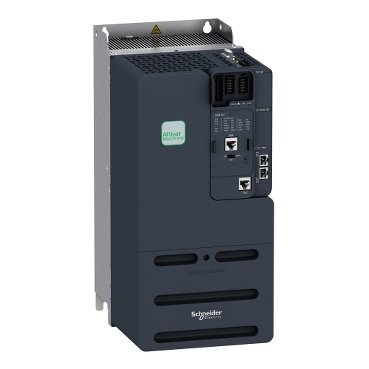
Schneider ATV340D75N4E Altivar | Variable speed drive, Altivar Machine ATV340, 75 kW, 400 V, 3 phases, Ethernet
Schneider ATV340D75N4E Altivar
Original price was: EGP 633,803.52.EGP 348,591.90Current price is: EGP 348,591.90.
Description
Schneider ATV340D75N4E Altivar
it is a powerhouse in the realm of industrial automation, renowned for its efficiency and advanced control capabilities. This article explores the core features, installation procedures, maintenance tips, and future potential of it, offering a comprehensive guide for industry professionals.
Understanding the Schneider ATV340D75N4E Altivar
it is a robust variable speed drive designed to meet the rigorous demands of industrial applications. It provides precise motor control, ensuring optimized performance and energy efficiency, crucial for modern manufacturing and processing environments.
What is Schneider ATV340D75N4E Altivar?
it is a high-performance variable speed drive with a power rating of 75 kW and a voltage rating of 380-480V. It is engineered to deliver superior motor control, enhancing the operational efficiency of various industrial machines and processes.
Key Features and Specifications
- Power Rating: 75 kW
- Voltage Rating: 380-480V
- Frequency Range: 0.1 to 500 Hz
- Overload Capacity: 150% for 60 seconds
- Protection Level: IP20
- Communication Protocols: Modbus, CANopen, Ethernet
Importance of Schneider ATV340D75N4E Altivar in Modern Industries
In today’s fast-paced industrial landscape, efficiency and reliability are key. The Schneider ATV340D75N4E Altivar plays a vital role by providing precise speed and torque control, reducing energy consumption, and enhancing the overall productivity of industrial operations.
Boosting Efficiency and Productivity
By implementing the Schneider ATV340D75N4E Altivar, industries can achieve significant improvements in efficiency. The drive’s advanced algorithms and control features ensure that motors operate at optimal speeds, minimizing energy wastage and maximizing output.
Installation and Setup Guide for Schneider ATV340D75N4E Altivar
Installing the Schneider ATV340D75N4E Altivar requires careful attention to detail. Here’s a step-by-step guide to ensure a smooth setup process:
- Preparation: Ensure all power sources are disconnected.
- Mounting: Secure the drive in a well-ventilated area to prevent overheating.
- Wiring: Follow the wiring diagram provided in the user manual. Connect power and control cables appropriately.
- Configuration: Power up the drive and configure settings according to the application requirements using the built-in keypad or a connected PC.
- Testing: Run initial tests to verify the setup and ensure the drive operates correctly.
Best Practices for Optimal Performance
To ensure your Schneider ATV340D75N4E Altivar performs at its best, adhere to these best practices:
- Regular Maintenance: Periodically inspect the drive for dust accumulation and clean it as necessary.
- Cooling: Maintain adequate ventilation around the drive to prevent overheating.
- Monitoring: Continuously monitor the drive’s performance and address any anomalies promptly.
- Firmware Updates: Keep the drive’s firmware updated to benefit from the latest features and improvements.
Ensuring Longevity and Reliability
Proper maintenance is crucial for the longevity and reliability of your Schneider ATV340D75N4E Altivar. Regular checks and timely interventions can prevent minor issues from escalating into major problems, ensuring continuous and efficient operation.
Troubleshooting Common Issues
Even with the best practices, issues may arise. Here are some common problems and their solutions:
- Overvoltage/Undervoltage: Ensure the power supply is stable and within the specified range.
- Overheating: Check for adequate ventilation and remove any obstructions to airflow.
- Communication Errors: Verify connections and settings for communication protocols like Modbus or Ethernet.
- Motor Issues: Inspect the motor and its connections for any faults or misconfigurations.
Quick Fixes and Tips
For minor issues, refer to the user manual for troubleshooting steps. If problems persist, consult with a qualified technician to avoid potential damage to the drive or connected machinery.
Advancements and Future of Schneider ATV340D75N4E Altivar
The Schneider ATV340D75N4E Altivar is not just about current performance but also about future readiness. As industrial automation evolves, this drive is poised to integrate seamlessly with emerging technologies such as the Industrial Internet of Things (IIoT), offering enhanced connectivity and data analytics capabilities.
Embracing Innovation in Industrial Automation
With advancements in digital technology, the Schneider ATV340D75N4E Altivar is set to play a pivotal role in the smart factories of the future. Enhanced features, improved efficiency, and greater connectivity will ensure that industries stay ahead in the competitive landscape.
Conclusion
The Schneider ATV340D75N4E Altivar stands as a testament to innovation in industrial automation. By understanding its features, installation procedures, and maintenance requirements, industries can harness its full potential to drive efficiency and productivity, ensuring a competitive edge in the market.
Additional information
| brands | Schneider Electric |
|---|
Specifications
| Range of product | Altivar Machine ATV340 |
|---|---|
| Product or component type | Variable speed drive |
| Product specific application | Machine |
| variant | Standard version |
| Mounting mode | Wall mount |
| communication port protocol | Modbus serial EtherNet/IP Modbus TCP |
| Option card | Communication module, PROFINET Communication module, DeviceNet Communication module, CANopen Communication module, EtherCAT |
| Network number of phases | 3 phases |
| Supply frequency | 50...60 Hz +/- 5 % |
| [Us] rated supply voltage | 380...480 V - 15...10 % |
| Nominal output current | 145.0 A |
| Motor power kW | 90 kW for normal duty 75 kW for heavy duty |
| Motor power hp | 125 hp for normal duty 100 hp for heavy duty |
| EMC filter | Class C3 EMC filter integrated |
| IP degree of protection | IP20 |
| Degree of protection | UL type 1 |
| Discrete input number | 8 |
|---|---|
| Discrete input type | PTI safe torque off: 0…30 kHz, 24 V DC (30 V) DI1...DI5 programmable as pulse input, 24 V DC (30 V), impedance: 3.5 kOhm programmable |
| number of preset speeds | 16 preset speeds |
| Discrete output number | 1.0 |
| Discrete output type | Programmable output DQ1, DQ2 30 V DC 100 mA |
| analogue input number | 3 |
| Analogue input type | AI1 software-configurable current: 0...20 mA, impedance: 250 Ohm, resolution 12 bits AI1 software-configurable temperature probe or water level sensor AI1 software-configurable voltage: 0...10 V DC, impedance: 31.5 kOhm, resolution 12 bits AI2 software-configurable voltage: - 10...10 V DC, impedance: 31.5 kOhm, resolution 12 bits |
| analogue output number | 2 |
| Analogue output type | Software-configurable voltage AQ1, AQ2: 0...10 V DC impedance 470 Ohm, resolution 10 bits Software-configurable current AQ1, AQ2: 0...20 mA impedance 500 Ohm, resolution 10 bits |
| Relay output number | 3 |
| Output voltage | <= power supply voltage |
| Relay output type | Relay outputs R1A Relay outputs R1C electrical durability 100000 cycles Relay outputs R2A Relay outputs R2C electrical durability 100000 cycles |
| Maximum switching current | Relay output R1C on resistive load, cos phi = 1: 3 A at 250 V AC Relay output R1C on resistive load, cos phi = 1: 3 A at 30 V DC Relay output R1C on inductive load, cos phi = 0.4 and L/R = 7 ms: 2 A at 250 V AC Relay output R1C on inductive load, cos phi = 0.4 and L/R = 7 ms: 2 A at 30 V DC Relay output R2C on resistive load, cos phi = 1: 5 A at 250 V AC Relay output R2C on resistive load, cos phi = 1: 5 A at 30 V DC Relay output R2C on inductive load, cos phi = 0.4 and L/R = 7 ms: 2 A at 250 V AC Relay output R2C on inductive load, cos phi = 0.4 and L/R = 7 ms: 2 A at 30 V DC |
| Minimum switching current | Relay output R1B: 5 mA at 24 V DC Relay output R2C: 5 mA at 24 V DC |
| Physical interface | 2-wire RS 485 |
| Connector type | 3 RJ45 |
| Method of access | Slave Modbus RTU Slave Modbus TCP |
| Transmission rate | 4.8 kbit/s 9.6 kbit/s 19.2 kbit/s 38.4 kbit/s |
| Transmission frame | RTU |
| Number of addresses | 1…247 |
| Data format | 8 bits, configurable odd, even or no parity |
| Type of polarization | No impedance |
| 4 quadrant operation possible | True |
| Asynchronous motor control profile | Variable torque standard Constant torque standard Optimized torque mode |
| Synchronous motor control profile | Reluctance motor Permanent magnet motor |
| Pollution degree | 2 conforming to IEC 61800-5-1 |
| Maximum output frequency | 0.599 kHz |
| Acceleration and deceleration ramps | S, U or customized Linear adjustable separately from 0.01...9999 s |
| Motor slip compensation | Adjustable Not available in permanent magnet motor law Automatic whatever the load Can be suppressed |
| Switching frequency | 1...8 kHz adjustable 2.5...8 kHz with derating factor |
| Nominal switching frequency | 2.5 kHz |
| Braking to standstill | By DC injection |
| Brake chopper integrated | True |
| Line current | 156.2 A at 380 V (normal duty) 135.8 A at 480 V (normal duty) 134.3 A at 380 V (heavy duty) 118.1 A at 480 V (heavy duty) |
| Line current | 156.2 A at 380 V with internal line choke (normal duty) 135.8 A at 480 V with internal line choke (normal duty) 134.3 A at 380 V with internal line choke (heavy duty) 118.1 A at 480 V with internal line choke (heavy duty) 134.3 A 118.1 A |
| Maximum input current | 156.2 A |
| Maximum output voltage | 480 V |
| Apparent power | 112.9 kVA at 480 V (normal duty) 98.2 kVA at 480 V (heavy duty) |
| Maximum transient current | 207.6 A during 60 s (normal duty) 217.5 A during 60 s (heavy duty) 207.6 A during 2 s (normal duty) 217.5 A during 2 s (heavy duty) |
| Electrical connection | Screw terminal, clamping capacity: 0.75...1.5 mm² for control Screw terminal, clamping capacity: 120 mm² for line side Screw terminal, clamping capacity: 95...120 mm² for DC bus Screw terminal, clamping capacity: 120 mm² for motor |
| Prospective line Isc | 50 kA |
| Base load current at high overload | 145.0 A |
| Base load current at low overload | 173.0 A |
| Power dissipation in W | Natural convection: 158 W at 380 V, switching frequency 4 kHz (heavy duty) Forced convection: 1359 W at 380 V, switching frequency 4 kHz (heavy duty) Natural convection: 180 W at 380 V, switching frequency 4 kHz (normal duty) Forced convection: 1585 W at 380 V, switching frequency 4 kHz (normal duty) |
| Electrical connection | Control: screw terminal 0.75...1.5 mm²/AWG 18...AWG 16 Line side: screw terminal 120 mm²/AWG 4/0...250 kcmil DC bus: screw terminal 95...120 mm²/AWG 3/0...250 kcmil Motor: screw terminal 120 mm²/250 kcmil |
| With safety function Safely Limited Speed (SLS) | True |
| With safety function Safe brake management (SBC/SBT) | True |
| With safety function Safe Operating Stop (SOS) | False |
| With safety function Safe Position (SP) | False |
| With safety function Safe programmable logic | False |
| With safety function Safe Speed Monitor (SSM) | False |
| With safety function Safe Stop 1 (SS1) | True |
| With sft fct Safe Stop 2 (SS2) | False |
| With safety function Safe torque off (STO) | True |
| With safety function Safely Limited Position (SLP) | False |
| With safety function Safe Direction (SDI) | False |
| Protection type | Thermal protection: motor Safe torque off: motor Motor phase loss: motor Thermal protection: drive Safe torque off: drive Overheating: drive Overcurrent: drive Output overcurrent between motor phase and earth: drive Output overcurrent between motor phases: drive Short-circuit between motor phase and earth: drive Short-circuit between motor phases: drive Motor phase loss: drive DC Bus overvoltage: drive Line supply overvoltage: drive Line supply undervoltage: drive Input supply loss: drive Exceeding limit speed: drive Break on the control circuit: drive |
| Width | 271.0 mm |
| height | 908.0 mm |
| Depth | 309.0 mm |
| Net weight | 58.4 kg |
| Continuous output current | 173 A at 4 kHz for normal duty 145 A at 4 kHz for heavy duty |
| Operating altitude | <= 4800 m with current derating above 1000m |
|---|---|
| Operating position | Vertical +/- 10 degree |
| product certifications | UL CSA TÜV EAC CTick |
| Marking | CE |
| Standards | IEC 61800-3 IEC 61800-5-1 IEC 60721-3 IEC 61508 IEC 13849-1 UL 618000-5-1 UL 508C IEC 61000-3-12 |
| Maximum THDI | <48 % full load conforming to IEC 61000-3-12 <48 % 80 % load conforming to IEC 61000-3-12 |
| Assembly style | With heat sink |
| Electromagnetic compatibility | Electrostatic discharge immunity test level 3 conforming to IEC 61000-4-2 Radiated radio-frequency electromagnetic field immunity test level 3 conforming to IEC 61000-4-3 Electrical fast transient/burst immunity test level 4 conforming to IEC 61000-4-4 1.2/50 µs - 8/20 µs surge immunity test level 3 conforming to IEC 61000-4-5 Conducted radio-frequency immunity test level 3 conforming to IEC 61000-4-6 |
| Environmental class (during operation) | Class 3C3 according to IEC 60721-3-3 Class 3S3 according to IEC 60721-3-3 |
| Maximum acceleration under shock impact (during operation) | 150 m/s² at 11 ms |
| Maximum acceleration under vibrational stress (during operation) | 10 m/s² at 13...200 Hz |
| Maximum deflection under vibratory load (during operation) | 1.5 mm at 2...13 Hz |
| Permitted relative humidity (during operation) | Class 3K5 according to EN 60721-3 |
| Volume of cooling air | 295.0 m3/h |
| Type of cooling | Forced convection |
| Overvoltage category | Class III |
| Regulation loop | Adjustable PID regulator |
| Noise level | 69.9 dB |
| Pollution degree | 2 |
| Ambient air transport temperature | -40…70 °C |
| Ambient air temperature for operation | -15…40 °C without derating (vertical position) 40…50 °C with derating factor (vertical position) |
| Ambient air temperature for storage | -40…70 °C |
| Isolation | Between power and control terminals |
| Unit Type of Package 1 | PCE |
|---|---|
| Number of Units in Package 1 | 1 |
| Package 1 Height | 60 cm |
| Package 1 Width | 43 cm |
| Package 1 Length | 111 cm |
| Package 1 Weight | 72.5 kg |


Reviews
There are no reviews yet.