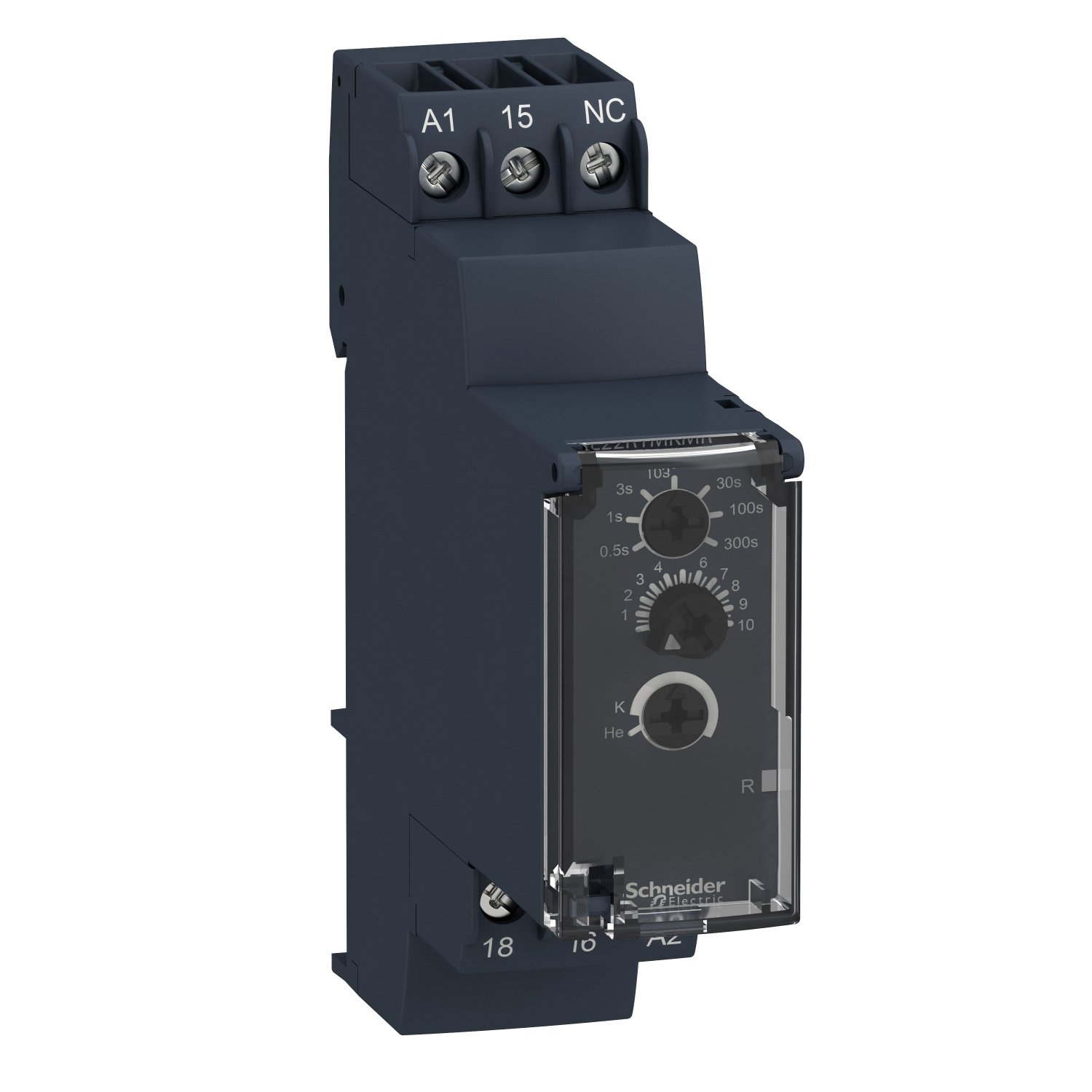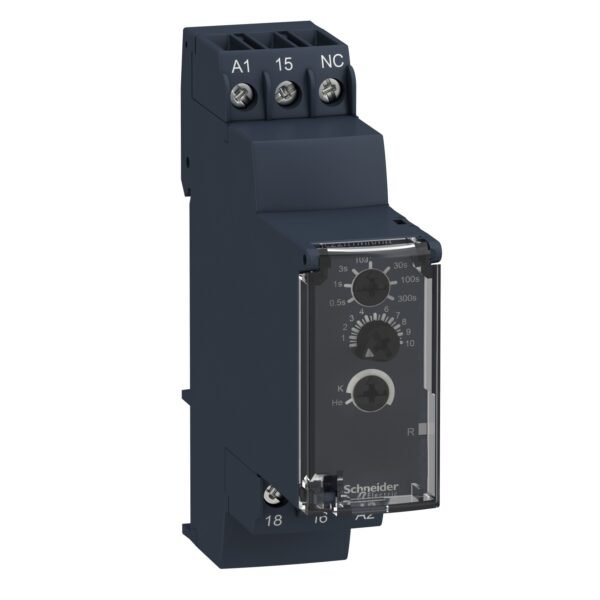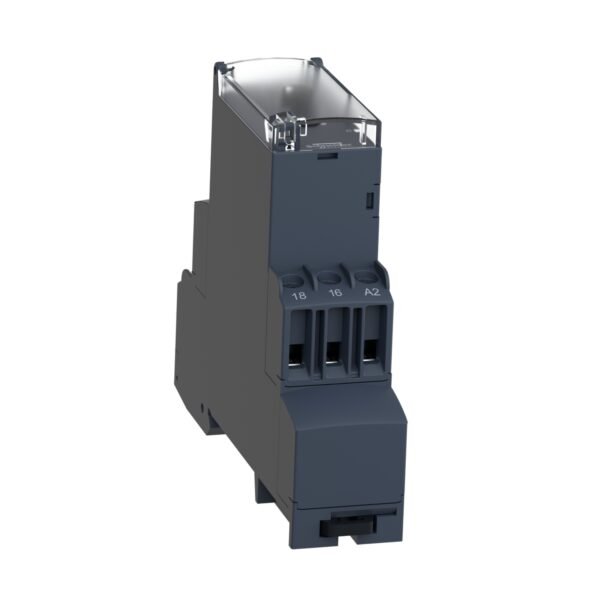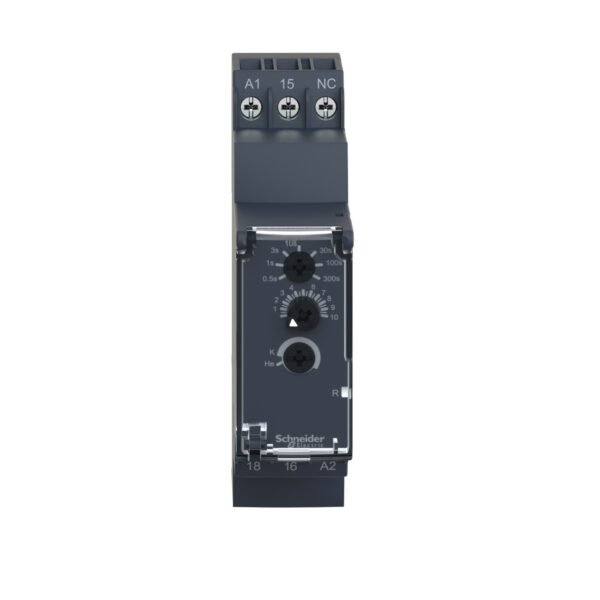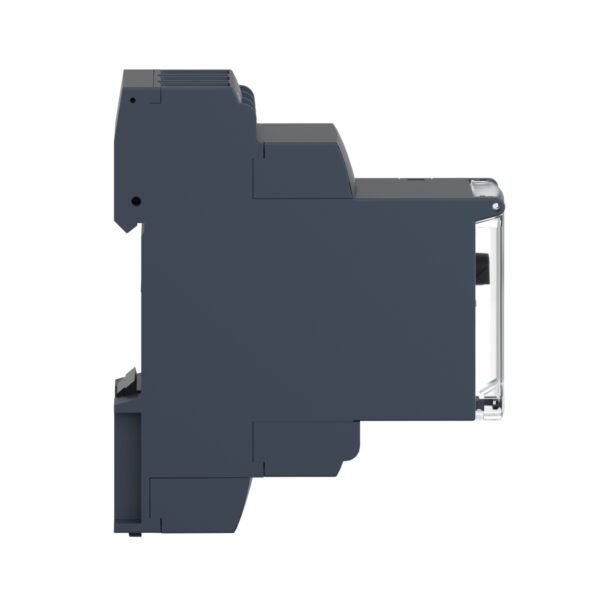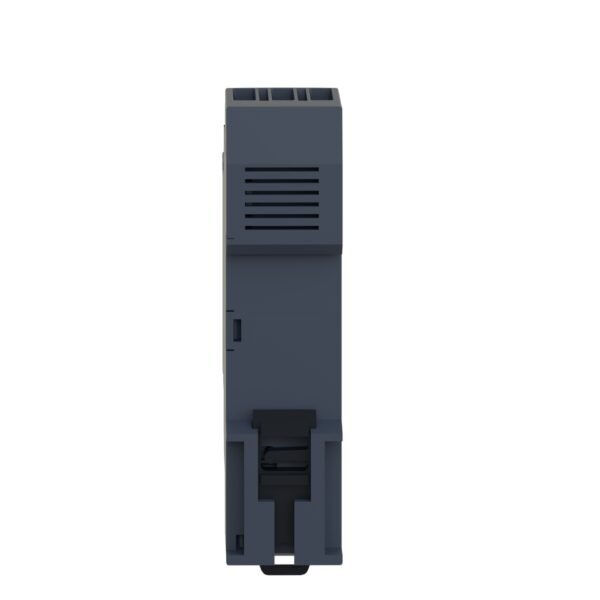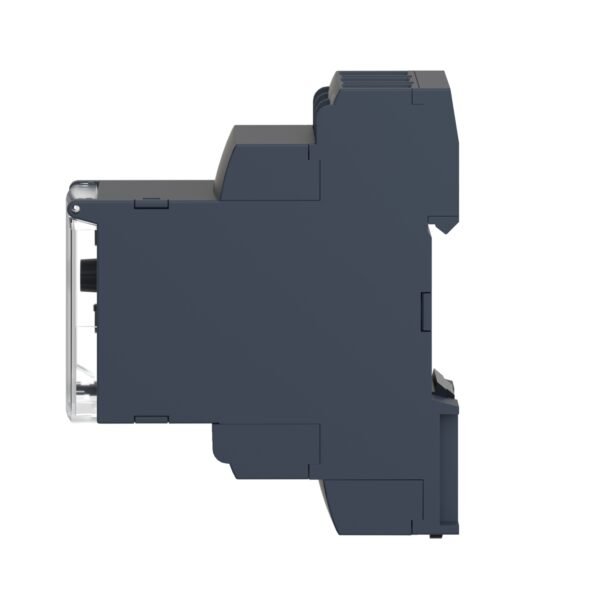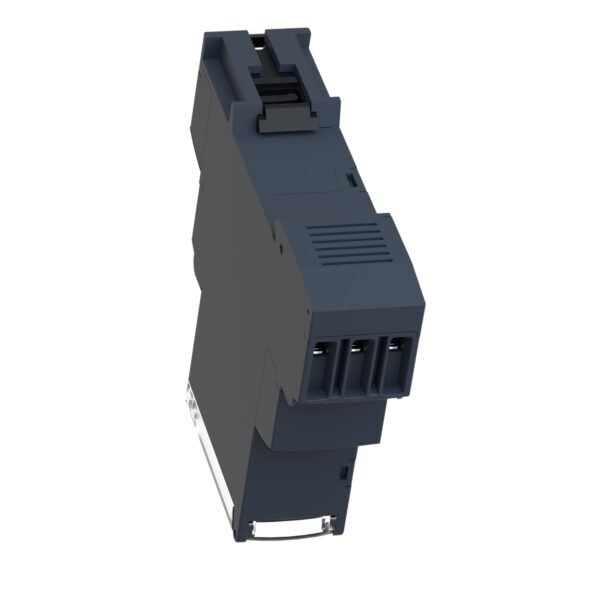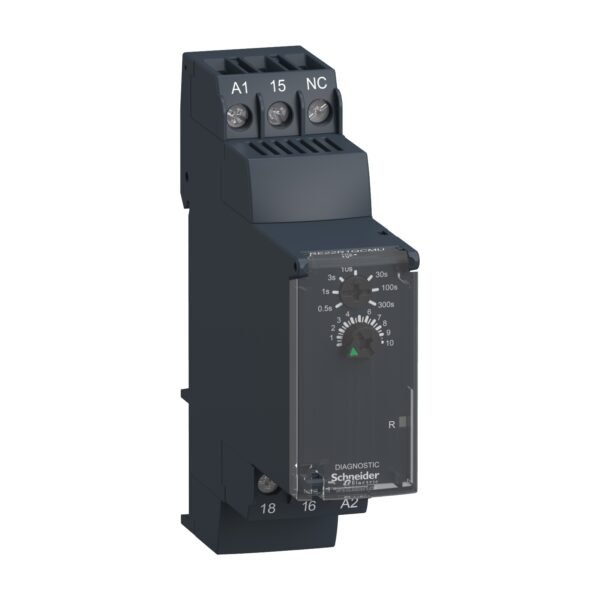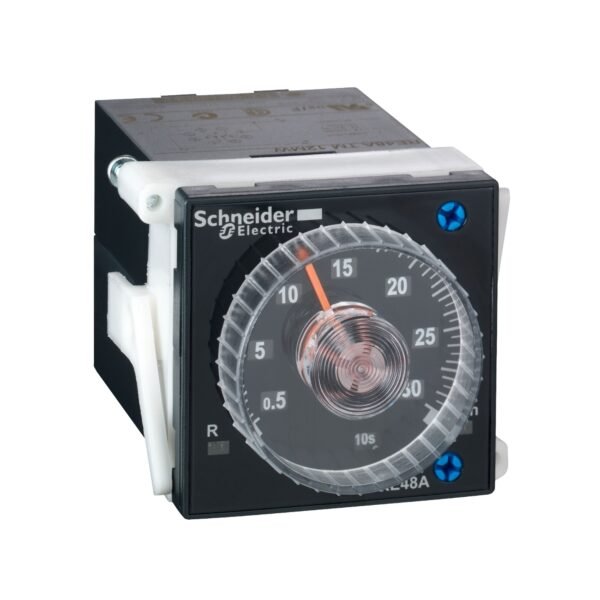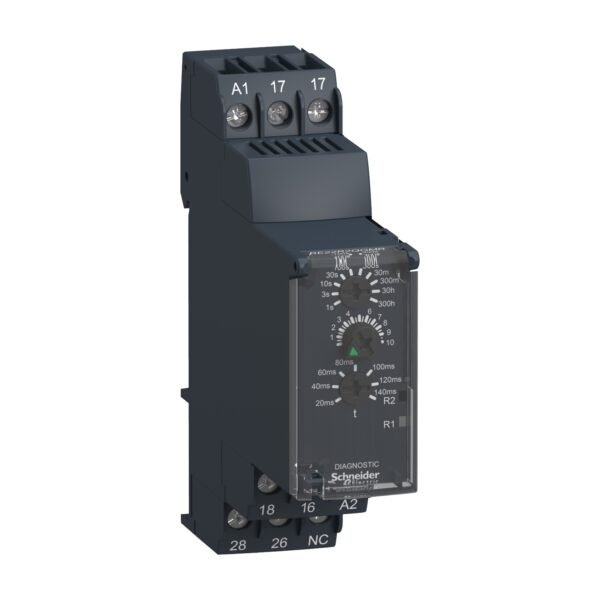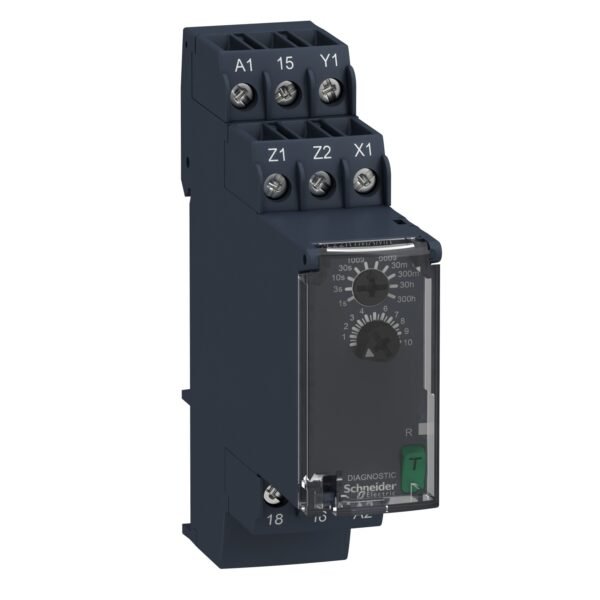
Schneider RE22R1MKMR | Modular timing relay, 5 A, 0.05 s…300 s, 1 CO, delay on and pulse on de-energization, 24…240 V AC/DC
Description
Schneider RE22R1MKMR | Modular timing relay, 5 A, 0.05 s…300 s, 1 CO, delay on and pulse on de-energization, 24…240 V AC/DC
Introduction
In the realm of electrical engineering, precision timing is crucial for various applications. One such vital component is the Schneider RE22R1MKMR Modular Timing Relay. This article delves into its features, applications, installation process, and more to provide a comprehensive understanding of its utility in different scenarios.
Understanding RE22R1MKMR
The Schneider RE22R1MKMR is a modular timing relay designed to handle electrical timing functions with precision. It operates within a wide range of time delays, from 0.05 seconds to 300 seconds, making it versatile for different tasks requiring timed operations. Its 1 CO (1 Changeover) contact configuration allows for flexible control options.
Features and Specifications
This relay is rated for 5 A current and compatible with both AC and DC voltages ranging from 24V to 240V, ensuring compatibility with various electrical systems. Its delay-on and pulse-on de-energization functionalities add to its versatility, suitable for applications requiring specific timing actions after power-off.
Applications
The RE22R1MKMR finds applications in industries such as automation, manufacturing, and control systems where precise timing functions are necessary. It can be used for timed lighting controls, motor controls, sequence control in machinery, and more, enhancing operational efficiency and safety.
Benefits of Modular Timing Relays
Modular timing relays like the Schneider RE22R1MKMR offer several advantages. They provide precise timing control, reduce wiring complexity, improve system reliability, and allow for easy integration into existing control setups. These benefits contribute to cost savings and enhanced performance in industrial settings.
Installation Process
Installing the RE22R1MKMR is straightforward for experienced technicians familiar with relay modules. It involves mounting the relay securely, connecting power and control signals following the manufacturer’s guidelines, and configuring timing parameters as per the application requirements.
How to Set Delay and Pulse
Configuring delay and pulse settings on the RE22R1MKMR is done through its intuitive interface. Users can adjust timing parameters using dedicated controls or programming tools provided by Schneider Electric. Clear documentation and online resources further assist in setting up these functionalities accurately.
Troubleshooting Tips
In case of operational issues or malfunctions, troubleshooting the RE22R1MKMR involves systematic checks of power supply, control signals, and relay settings. Schneider Electric provides troubleshooting guides and technical support to address common issues quickly and ensure uninterrupted operation.
Maintenance Guidelines
Regular maintenance ensures the optimal performance and longevity of the RE22R1MKMR. It includes periodic inspections for wear, cleaning electrical contacts, checking connections for tightness, and updating firmware or settings as needed. Following manufacturer-recommended maintenance schedules minimizes downtime and extends the relay’s lifespan.
Comparison with Other Relays
Comparing the RE22R1MKMR with other timing relays in the market highlights its unique features, reliability, and cost-effectiveness. Factors like precision timing range, compatibility, ease of installation, and brand reputation influence the choice between different relay models based on specific project requirements.
Customer Reviews
Customer feedback on the RE22R1MKMR often praises its accuracy, durability, and user-friendly design. Positive experiences regarding its performance in diverse applications add credibility to its reputation as a reliable timing relay solution.
Conclusion
The Schneider RE22R1MKMR Modular Timing Relay stands out as a dependable choice for precise timing control in electrical systems. Its versatile features, ease of installation, and compatibility make it a preferred option across industries requiring timed operations. Investing in such advanced relay technology enhances automation efficiency and ensures seamless control in various applications.
FAQs
- What is the typical lifespan of the Schneider RE22R1MKMR relay?
- Can I use this relay for outdoor applications exposed to varying temperatures and weather conditions?
- Does the relay come with built-in diagnostics for easy troubleshooting?
- Is programming the timing parameters user-friendly for non-technical personnel?
- Are there any safety precautions to consider when working with the RE22R1MKMR relay?
Additional information
| brands | Schneider Electric |
|---|
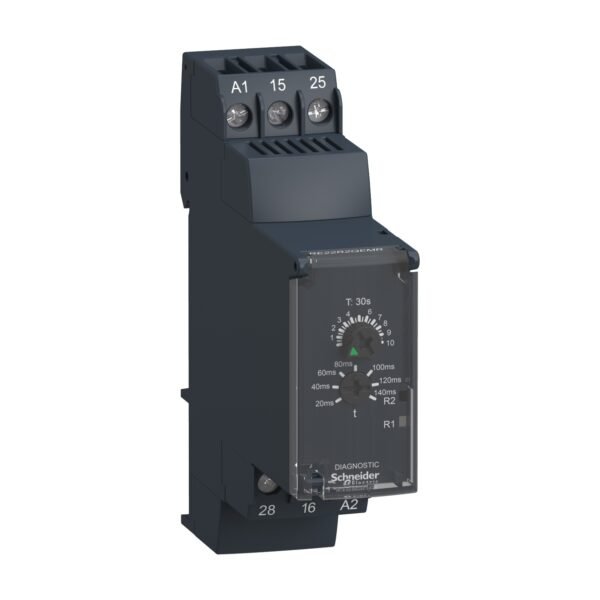
Specifications
| Range of product | Harmony Timer Relays |
|---|---|
| Discrete output type | Relay |
| Product or component type | Modular timing relay |
| Device short name | RE22 |
| Nominal output current | 5 A |
| Contacts type and composition | 1 C/O timed contact, cadmium free |
|---|---|
| Time delay type | Pulse-on de-energization Delay on de-energization |
| Time delay range | 0.3...3 s 0.05...0.5 s 3...30 s 0.1...1 s 30...300 s 10...100 s 1...10 s |
| Control type | Rotary knob |
| [Us] rated supply voltage | 24...240 V AC/DC 50/60 Hz |
| Release input voltage | <= 2.4 V |
| Voltage range | 0.85...1.1 Us |
| Supply frequency | 50...60 Hz +/- 5 % |
| Connections - terminals | Screw terminals, 1 x 0.5...1 x 3.3 mm² (AWG 20...AWG 12) solid without cable end Screw terminals, 2 x 0.5...2 x 2.5 mm² (AWG 20...AWG 14) solid without cable end Screw terminals, 1 x 0.2...1 x 2.5 mm² (AWG 24...AWG 14) flexible with cable end Screw terminals, 2 x 0.2...2 x 1.5 mm² (AWG 24...AWG 16) flexible with cable end |
| Tightening torque | 0.6…1 N.m conforming to IEC 60947-1 |
| Housing material | Self-extinguishing |
| Repeat accuracy | +/- 0.5 % conforming to IEC 61812-1 |
| Temperature drift | +/- 0.05 %/°C |
| Voltage drift | +/- 0.2 %/V |
| Setting accuracy of time delay | +/- 10 % of full scale at 25 °C conforming to IEC 61812-1 |
| Time delay type | Interval - He-Pulse-on de-energization Off-delay - K-Delay on de-energization (without auxiliary supply) |
| Insulation resistance | 100 MOhm at 500 V DC conforming to IEC 60664-1 |
| Recovery time | 50 ms on de-energisation |
| Immunity to microbreaks | 10 ms |
| Power consumption in VA | 3 VA at 240 V AC |
| Power consumption in W | 2 W at 240 V DC |
| Switching capacity in VA | 1250 VA |
| Minimum switching current | 10 mA at 5 V DC |
| Maximum switching current | 5 A |
| Maximum switching voltage | 250 V AC |
| Electrical durability | 100000 cycles, 2 A at 24 V, DC-1 100000 cycles, 5 A at 250 V, AC-1 |
| Mechanical durability | 10000000 cycles |
| Rated impulse withstand voltage | 5 kV for 1.2…50 µs conforming to IEC 60664-1 |
| Power on delay | 100 ms |
| Creepage distance | 4 kV/3 conforming to IEC 60664-1 |
| Overvoltage category | III conforming to IEC 60664-1 |
| Safety reliability data | B10d = 180000 MTTFd = 194 years |
| Mounting position | Any position |
| Mounting support | 35 mm DIN rail conforming to IEC 60715 |
| Status LED | LED backlight green (steady) for dial pointer indication LED yellow (steady) for output relay energised LED yellow (steady) for power ON |
| Function available | He-Pulse-on de-energization-1 C/O K-Delay on de-energization (without auxiliary supply)-1 C/O |
| Width | 22.5 mm |
| Net weight | 0.1 kg |
| Control type | With test button |
| Number of functions | 2 |
| Dielectric strength | 2.5 kV for 1 mA/1 minute at 50 Hz between relay output and power supply with basic insulation conforming to IEC 61812-1 |
|---|---|
| Standards | IEC 61812-1 UL 508 |
| Directives | 2006/95/EC - low voltage directive 2004/108/EC - electromagnetic compatibility |
| Product certifications | GL UL CSA RCM CCC CE EAC |
| Ambient air temperature for operation | -20…60 °C |
| Ambient air temperature for storage | -40…70 °C |
| IP degree of protection | IP40 housing: conforming to IEC 60529 IP50 front face: conforming to IEC 60529 IP20 terminals: conforming to IEC 60529 |
| Pollution degree | 3 conforming to IEC 60664-1 |
| Vibration resistance | 20 m/s² (f= 10…150 Hz) conforming to IEC 60068-2-6 |
| Shock resistance | 15 gn not operating for 11 ms conforming to IEC 60068-2-27 5 gn in operation for 11 ms conforming to IEC 60068-2-27 |
| Relative humidity | 95 % at 25…55 °C |
| Electromagnetic compatibility | Fast transients immunity test - test level: 1 kV level 3 (capacitive connecting clip) conforming to IEC 61000-4-4 Surge immunity test - test level: 1 kV level 3 (differential mode) conforming to IEC 61000-4-5 Surge immunity test - test level: 2 kV level 3 (common mode) conforming to IEC 61000-4-5 Electrostatic discharge - test level: 6 kV level 3 (contact discharge) conforming to IEC 61000-4-2 Electrostatic discharge - test level: 8 kV level 3 (air discharge) conforming to IEC 61000-4-2 Radiated radio-frequency electromagnetic field immunity test - test level: 10 V/m level 3 (80 MHz...1 GHz) conforming to IEC 61000-4-3 Conducted RF disturbances - test level: 10 V level 3 (0.15...80 MHz) conforming to IEC 61000-4-6 Fast transient bursts - test level: 2 kV level 3 (direct contact) conforming to IEC 61000-4-4 Immunity to microbreaks and voltage drops - test level: 30 % (500 ms) conforming to IEC 61000-4-11 Immunity to microbreaks and voltage drops - test level: 100 % (20 ms) conforming to IEC 61000-4-11 |
| Unit Type of Package 1 | PCE |
|---|---|
| Number of Units in Package 1 | 1 |
| Package 1 Height | 2.5 cm |
| Package 1 Width | 8.3 cm |
| Package 1 Length | 9.5 cm |
| Package 1 Weight | 91.0 g |
| Unit Type of Package 2 | S02 |
| Number of Units in Package 2 | 40 |
| Package 2 Height | 15.0 cm |
| Package 2 Width | 30.0 cm |
| Package 2 Length | 40.0 cm |
| Package 2 Weight | 4.088 kg |
| Unit Type of Package 3 | P06 |
| Number of Units in Package 3 | 640 |
| Package 3 Height | 80.0 cm |
| Package 3 Width | 80.0 cm |
| Package 3 Length | 60.0 cm |
| Package 3 Weight | 73.38 kg |
Reviews
There are no reviews yet.