

No products in the cart.
 All Categories
-46%On Sale
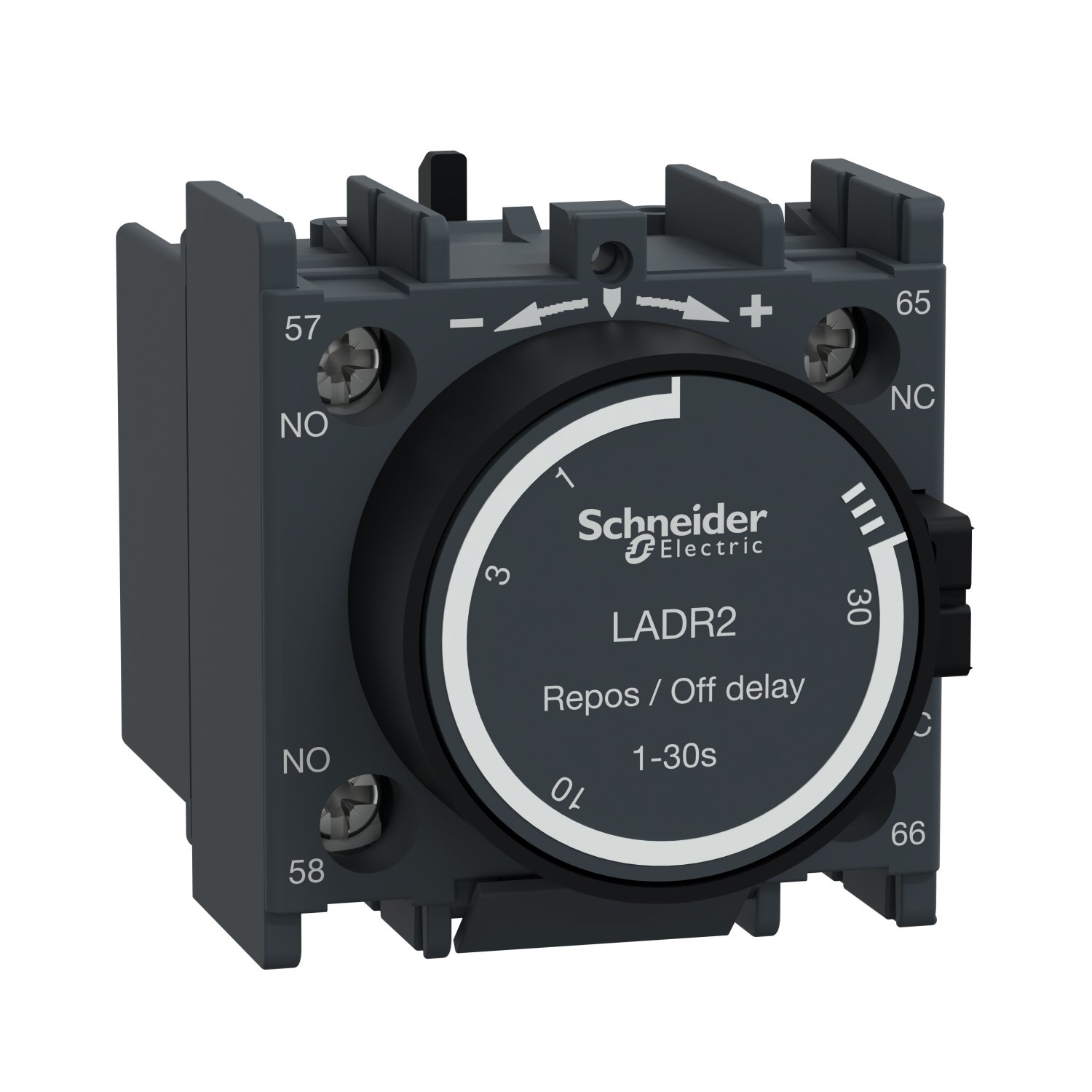
Schneider LADR2 | Time delay auxiliary contact block, TeSys D, 1NO + 1NC, off delay 1-30 s, front mounting, screw terminals
Schneider LADR2
Original price was: EGP 51,614.00.EGP 27,872.00Current price is: EGP 27,872.00.
Description
Schneider LADR2 TeSys
stands as a pinnacle in the realm of industrial automation and smart grid solutions. In today’s rapidly evolving technological landscape, businesses and utilities seek innovative ways to enhance efficiency, reliability, and sustainability. Schneider Electric, a global leader in energy management and automation, has introduced the LADR2 platform to address these crucial needs effectively.
What is Schneider LADR2?
it is an advanced and versatile solution designed to streamline industrial processes, optimize energy usage, and facilitate seamless integration within smart grid infrastructures. Leveraging cutting-edge technology and robust engineering, it empowers organizations to achieve superior performance, maximize productivity, and adapt to changing operational requirements with ease.
Key Features
Robust Design
At the core of it lies a robust and resilient architecture built to withstand the demands of industrial environments. Whether deployed in manufacturing facilities, power plants, or utility substations, LADR2 ensures uninterrupted operation and long-term reliability.
Advanced Technology
Equipped with state-of-the-art sensors, controllers, and communication modules, it harnesses the power of data-driven insights to optimize processes and enhance decision-making. Real-time monitoring, predictive analytics, and adaptive control algorithms enable proactive maintenance and efficient resource allocation.
Customization Options
Recognizing the diverse needs of its users, it offers extensive customization options to tailor the solution according to specific requirements. From scalability and modularity to compatibility with third-party systems, it provides flexibility and versatility unmatched by traditional automation platforms.
Applications
it finds applications across various industries and sectors, revolutionizing how organizations manage their operations and energy resources.
Industrial Automation
In manufacturing environments, LADR2 enables seamless integration of disparate systems, optimizing production processes, and minimizing downtime. From assembly lines to material handling, quality, and safety.
Smart Grid Solutions
Within the realm of smart grid solutions, LADR2 plays a pivotal role in optimizing energy distribution, improving grid stability, and facilitating the integration of renewable energy sources. Through advanced monitoring and control capabilities, LADR2 empowers utilities to meet growing energy demands sustainably.
Renewable Energy Integration
As the world transitions towards renewable energy sources, LADR2 provides critical support for integrating solar, wind, and other renewable technologies into existing power systems. By managing fluctuations in generation and demand, LADR2 ensures the reliability and stability of renewable energy installations.
Benefits of Using
Increased Efficiency
By optimizing processes, minimizing waste, and reducing energy consumption, it helps organizations achieve significant improvements in efficiency and productivity. Through data-driven insights and automation, LADR2 identifies opportunities for optimization and implements targeted solutions to maximize output.
Cost Savings
The adoption of it translates into tangible cost savings for businesses and utilities alike. By reducing downtime, optimizing resource utilization, and improving asset performance, LADR2 enables organizations to lower operating expenses and achieve a rapid return on investment.
Reliability
With its robust design, advanced technology, and comprehensive support infrastructure, it offers unparalleled reliability and uptime. Whether in mission-critical applications or harsh operating conditions, it delivers consistent performance and peace of mind to its users.
Comparison with Other Solutions
In comparison to traditional automation and control systems, it offers several distinct advantages. From its modular architecture to its advanced analytics capabilities, LADR2 outperforms legacy solutions in terms of flexibility, scalability, and functionality.
How to Implement Schneider LADR2
Implementing it involves a systematic approach to ensure seamless integration and optimal performance.
Initial Assessment
The first step in deploying LADR2 is to conduct a comprehensive assessment of the existing infrastructure, operational requirements, and performance objectives. This initial evaluation forms the basis for designing a tailored solution that meets the specific needs of the organization.
Installation Process
Once the requirements have been defined, the installation process begins, involving the deployment of hardware components, configuration of software modules, and integration with existing systems. Schneider’s team of experts works closely with the client to ensure a smooth and efficient installation process.
Integration with Existing Systems
One of the key strengths of it is its ability to seamlessly integrate with a wide range of existing systems and technologies. Whether interfacing with legacy equipment or third-party software platforms, LADR2 ensures interoperability and compatibility, minimizing disruptions and maximizing ROI.
Case Studies
Real-world examples demonstrate the transformative impact of it across different industries and applications.
Company A: Enhanced Production Efficiency
By implementing it in its manufacturing facility, Company A achieved a 20% increase in production efficiency, reduced downtime by 30%, and improved product quality. The real-time monitoring and predictive maintenance capabilities of LADR2 enabled proactive decision-making and optimization of production processes.
Additional information
| brands | Schneider Electric |
|---|
Specifications
| Range | TeSys TeSys Deca |
|---|---|
| Product name | TeSys Deca |
| Product or component type | Time delay auxiliary contact block |
| Range compatibility | TeSys Deca CAD TeSys Deca LC1D TeSys F LC1F TeSys F CR1F |
| Mounting location | Front |
| Pole contact composition | 1 NO + 1 NC |
| Contacts operation | Time delay |
| Timer type | Off delay |
| Time delay range | 1...30 s |
| [Ue] rated operational voltage | 690 V AC 25...400 Hz |
| [Ie] rated operational current | 6 A at 120 V AC-15 1.04 A at 690 V AC-15 0.55 A at 125 V DC-13 0.1 A at 600 V DC-13 |
| [Ui] rated insulation voltage | 690 V conforming to IEC 60947-5-1 600 V conforming to UL 60947-5-1 600 V conforming to CSA C22.2 No 60947-5-1 |
| [Ith] conventional free air thermal current | 10 A (at 60 °C) |
| Standards | EN/IEC 60947-5-1 UL 60947-5-1 CSA C22.2 No 60947-5-1 GB/T 14048.5 EN 50012 IEC 60335-1:Clause 30.2 IEC 60335-2-40:Annex JJ UL 60335-2-40:Annex JJ |
| Product certifications | IECEE CB Scheme UL CSA CCC EAC UKCA |
| Irms rated making capacity | 140 A at <= 690 V AC conforming to IEC 60947-5-1 250 A at <= 690 V DC conforming to IEC 60947-5-1 |
|---|---|
| Permissible short-time rating | 100 A 60 °C 1 s 120 A 60 °C 500 ms 140 A 60 °C 100 ms |
| Protection type | GG fuse 10 A |
| Mechanical durability | 5 Mcycles |
| Minimum switching current | 5 mA |
| Minimum switching voltage | 17 V |
| Non-overlap time | 1.5 ms on de-energisation no overlap between NC and NO contact 1.5 ms on energisation no overlap between NC and NO contact |
| Insulation resistance | > 10 MOhm |
| Connections - terminals | Screw clamp terminals 1 cable(s) 1…2.5 mm²flexible with cable end Screw clamp terminals 1 cable(s) 1…2.5 mm²flexible without cable end Screw clamp terminals 2 cable(s) 1…2.5 mm²flexible with cable end Screw clamp terminals 2 cable(s) 1…2.5 mm²flexible without cable end Screw clamp terminals 1 cable(s) 1…2.5 mm²rigid Screw clamp terminals 2 cable(s) 1…2.5 mm²rigid Screw clamp terminals |
| Tightening torque | 1.7 N.m - with screwdriver flat Ø 6 mm 1.7 N.m - with screwdriver Philips No 2 1.7 N.m - with screwdriver pozidriv No 2 |
| Height | 48 mm |
| Width | 44 mm |
| Depth | 61 mm |
| Colour | Dark grey |
| Environmental characteristic | Normal environment |
|---|---|
| IP degree of protection | IP20 conforming to IEC 60529 |
| Protective treatment | TH conforming to IEC 60068 |
| Ambient air temperature for storage | -60…80 °C |
| Ambient air temperature for operation | -40…70 °C |
| Operating altitude | 3000 m |
| Unit Type of Package 1 | PCE |
|---|---|
| Number of Units in Package 1 | 1 |
| Package 1 Height | 5.200 cm |
| Package 1 Width | 6.500 cm |
| Package 1 Length | 5.000 cm |
| Package 1 Weight | 74.000 g |
| Unit Type of Package 2 | BB1 |
| Number of Units in Package 2 | 10 |
| Package 2 Height | 5.200 cm |
| Package 2 Width | 13.000 cm |
| Package 2 Length | 24.000 cm |
| Package 2 Weight | 756.000 g |
| Unit Type of Package 3 | S03 |
| Number of Units in Package 3 | 140 |
| Package 3 Height | 30.000 cm |
| Package 3 Width | 30.000 cm |
| Package 3 Length | 40.000 cm |
| Package 3 Weight | 11.121 kg |
| Warranty | 18 |
|---|


Reviews
There are no reviews yet.