

No products in the cart.
 All Categories
Description
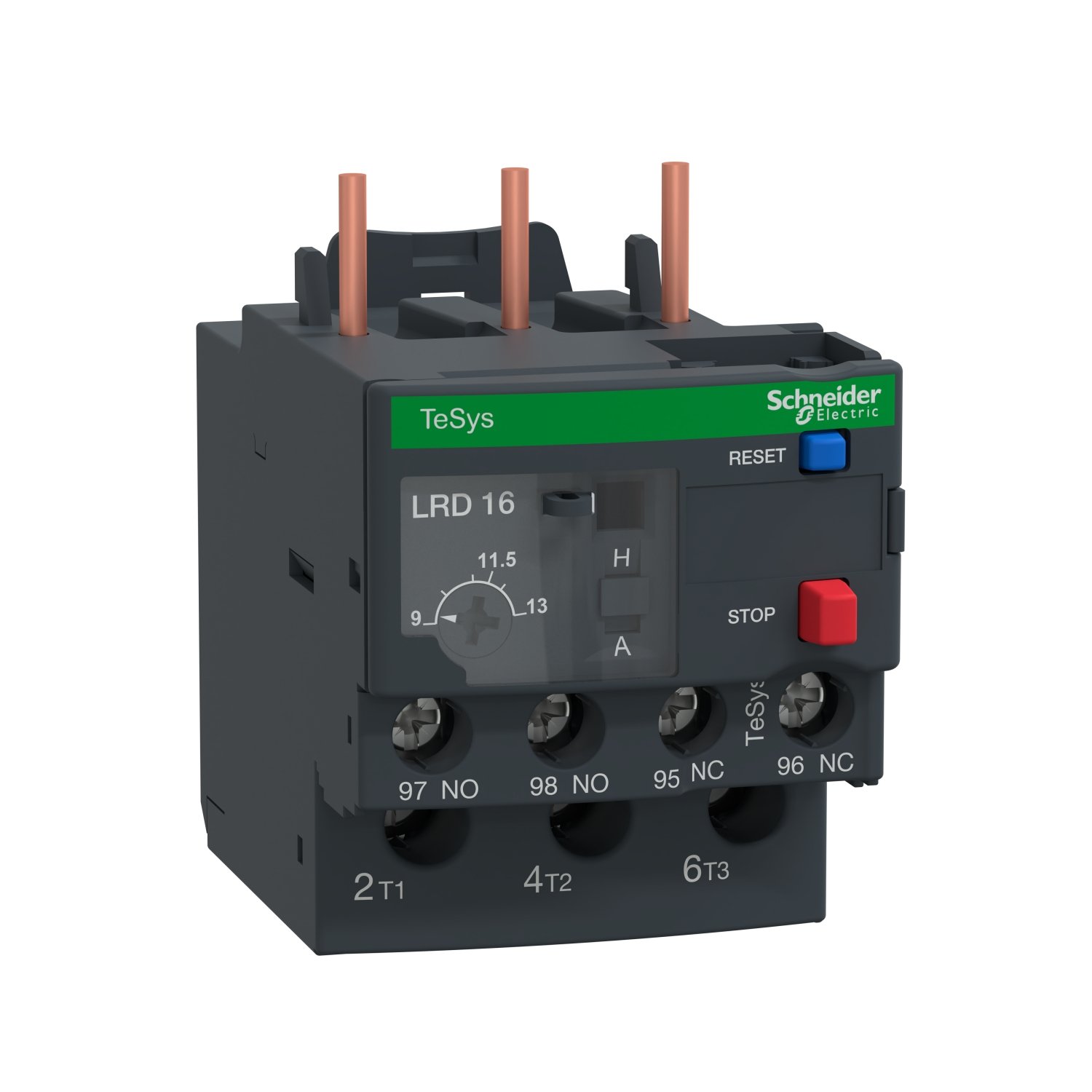
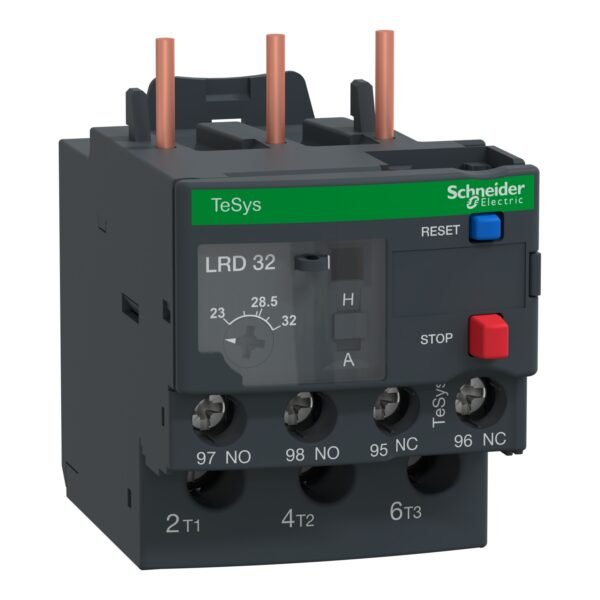
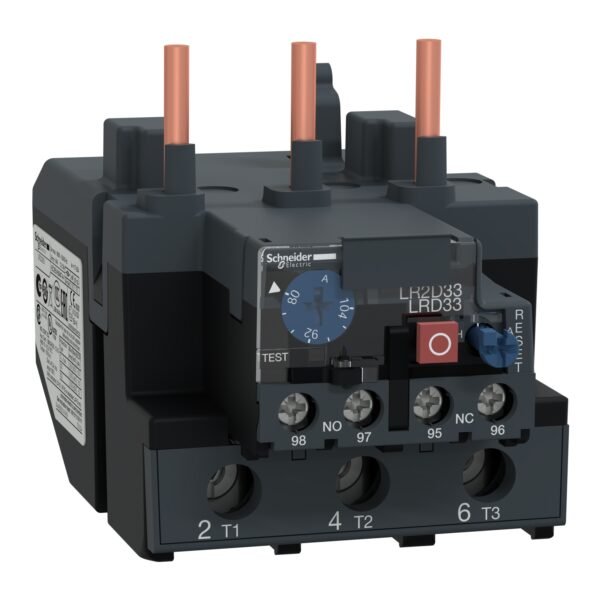
Schneider LRD16: The Ultimate Thermal Overload Relay
Thermal overload relays are essential components in electrical systems, providing protection against overheating and potential damage. Among the leading brands in this field, Schneider Electric stands out with its LRD16 model. In this article, we’ll delve into the description, features, applications, and advantages of the Schneider LRD16 thermal overload relay, along with installation guides, troubleshooting tips, maintenance advice, and customer feedback.
Understanding Thermal Overload Relays
What are thermal overload relays?
Thermal overload relays are protective devices designed to prevent motors and other electrical equipment from overheating. They monitor the current flowing through the circuit and trip the circuit if it exceeds a preset value for a certain period, thus safeguarding the equipment from damage due to excessive heat.
How do they work?
Thermal overload relays operate based on the principle of thermal expansion. They contain a bimetallic strip or a heating element that responds to the current passing through the circuit. When the current exceeds the set threshold, the strip or element heats up, causing it to bend and trigger the relay to disconnect the circuit.
Features of Schneider LRD16
The Schneider LRD16 thermal overload relay offers several key features that make it a preferred choice for protecting electrical equipment:
- Reliable thermal protection: The LRD16 provides accurate and dependable protection against motor overloads, ensuring the safety and longevity of equipment.
- Adjustable current settings: Users can easily adjust the current settings of the relay to suit specific application requirements, providing flexibility and customization.
- Compact design: With its compact and space-saving design, the LRD16 can be conveniently installed in various electrical panels and enclosures.
- Easy installation: The relay is designed for quick and hassle-free installation, saving time and effort during setup.
Applications of Schneider LRD16
The Schneider LRD16 thermal overload relay finds widespread use across various industries and applications, including:
- Industrial machinery: It protects motors and equipment used in manufacturing, processing, and production facilities.
- HVAC systems: The relay safeguards heating, ventilation, and air conditioning systems from overload conditions, ensuring uninterrupted operation.
- Electrical panels: It is commonly integrated into electrical distribution panels to protect circuits and equipment from overcurrents.
Advantages of Using Schneider LRD16
Utilizing the Schneider LRD16 thermal overload relay offers numerous benefits, including:
- Prevents overheating: By promptly detecting and tripping in case of overload conditions, the LRD16 prevents equipment from overheating and potential damage.
- Increases equipment lifespan: Continuous protection against overloads extends the lifespan of motors and electrical equipment, reducing maintenance costs and downtime.
- Reduces downtime: By preventing unexpected shutdowns due to overheating, the relay helps minimize downtime and productivity losses in industrial settings.
Installation and Setup Guide
Installing and setting up the Schneider LRD16 thermal overload relay is straightforward, following these steps:
- Mounting instructions: Securely mount the relay in a suitable location, ensuring proper ventilation and accessibility for maintenance.
- Wiring procedures: Connect the relay to the motor or electrical circuit according to the manufacturer’s instructions, ensuring correct polarity and tight connections.
- Adjusting current settings: Set the desired current rating on the relay using the provided adjustment dial or interface, taking into account the requirements of the connected equipment.
Troubleshooting Common Issues
Despite its reliability, users may encounter certain issues with the Schneider LRD16 thermal overload relay, including:
- Relay not tripping: This could indicate a faulty relay or incorrect current settings. Check for proper installation and calibration.
- Continuous tripping: Excessive tripping may suggest an overloaded circuit or a defective component. Inspect the connected equipment and wiring for any faults.
- Incorrect current setting: Verify that the relay’s current rating matches the requirements of the connected motor or equipment. Adjust if necessary to prevent false trips.
Maintenance Tips for Schneider LRD16
To ensure optimal performance and longevity of the Schneider LRD16 thermal overload relay, follow these maintenance guidelines:
- Regular inspection: Periodically inspect the relay for any signs of damage, corrosion, or loose connections. Address any issues promptly to prevent malfunction.
- Cleaning procedures: Keep the relay and its surroundings clean from dust, debris, and moisture, as these can affect its performance and reliability.
- Calibration checks: Verify the accuracy of the relay’s current settings periodically, recalibrating if needed to maintain proper protection levels.
Comparison with Other Thermal Overload Relays
When comparing the Schneider LRD16 with other thermal overload relays on the market, consider factors such as:
- Size and weight: The compact design of the LRD16 makes it suitable for installations where space is limited.
- Performance: Schneider Electric is renowned for its high-quality products, ensuring reliable and accurate protection against overloads.
- Price: While the initial cost of the LRD16 may be higher than some competitors, its durability and performance justify the investment in the long run.
Customer Reviews and Feedback
Customers who have used the Schneider LRD16 thermal overload relay have praised its reliability, ease of installation, and effective protection against overloads. Many have reported significant reductions in downtime and maintenance costs since implementing the relay in their systems.
Conclusion
In conclusion, the Schneider LRD16 thermal overload relay stands out as a reliable and efficient solution for protecting electrical equipment from overheating and damage. With its advanced features, easy installation, and robust performance, it offers peace of mind to users across various industries.
FAQs
- What is the warranty period for the Schneider LRD16 relay?
- The standard warranty period for the LRD16 relay is typically one year from the date of purchase, but extended warranties may be available.
-
**Can
Additional information
| brands | Schneider Electric |
|---|
Specifications
| Range | TeSys TeSys Deca |
|---|---|
| Product name | TeSys LRD TeSys Deca |
| Product or component type | Differential thermal overload relay |
| Device short name | LRD |
| Relay application | Motor protection |
| Product compatibility | LC1D18 LC1D38 LC1D32 LC1D12 LC1D25 |
| Network type | DC AC |
| Thermal overload class | Class 10A conforming to IEC 60947-4-1 |
| Thermal protection adjustment range | 9…13 A |
| [Ui] rated insulation voltage | Power circuit: 600 V conforming to CSA Power circuit: 600 V conforming to UL Power circuit: 690 V conforming to IEC 60947-4-1 |
| Network frequency | 0...400 Hz |
|---|---|
| Mounting support | Plate, with specific accessories Rail, with specific accessories Under contactor |
| Tripping threshold | 1.14 +/- 0.06 Ir conforming to IEC 60947-4-1 |
| Auxiliary contact composition | 1 NO + 1 NC |
| [Ith] conventional free air thermal current | 5 A for signalling circuit |
| Permissible current | 1.5 A at 240 V AC-15 for signalling circuit 0.1 A at 250 V DC-13 for signalling circuit |
| [Ue] rated operational voltage | 690 V AC 0...400 Hz for power circuit conforming to IEC 60947-4-1 |
| Associated fuse rating | 4 A gG for signalling circuit 4 A BS for signalling circuit |
| [Uimp] rated impulse withstand voltage | 6 kV |
| Phase failure sensitivity | Tripping current 130 % of Ir on two phase, the last one at 0 |
| Control type | Red push-button: stop Blue push-button: reset |
| Temperature compensation | -20…60 °C |
| Connections - terminals | Control circuit: screw clamp terminals 2 cable(s) 1…2.5 mm² flexible without cable end Control circuit: screw clamp terminals 2 cable(s) 1…2.5 mm² flexible with cable end Control circuit: screw clamp terminals 2 cable(s) 1…2.5 mm² solid Power circuit: screw clamp terminals 1 cable(s) 1.5…10 mm² flexible without cable end Power circuit: screw clamp terminals 1 cable(s) 1…4 mm² flexible with cable end Power circuit: screw clamp terminals 1 cable(s) 1…6 mm² solid |
| Tightening torque | Control circuit: 1.7 N.m - on screw clamp terminals Power circuit: 1.7 N.m - on screw clamp terminals |
| Height | 66 mm |
| Width | 45 mm |
| Depth | 70 mm |
| Net weight | 0.124 kg |
| Climatic withstand | conforming to IACS E10 |
|---|---|
| IP degree of protection | IP20 conforming to IEC 60529 |
| Ambient air temperature for operation | -20…60 °C without derating conforming to IEC 60947-4-1 |
| Ambient air temperature for storage | -60…70 °C |
| Flame retardance | V1 conforming to UL 94 |
| Mechanical robustness | Vibrations: 6 Gn conforming to IEC 60068-2-6 Shocks: 15 Gn for 11 ms conforming to IEC 60068-2-7 |
| Dielectric strength | 1.89 kV at 50 Hz conforming to IEC 60947-1 |
| Standards | EN/IEC 60947-4-1 EN/IEC 60947-5-1 UL 60947-4-1 UL 60947-5-1 CSA C22.2 No 60947-4-1 CSA C22.2 No 60947-5-1 GB/T 14048.4 GB/T 14048.5 EN 50495 |
| Product certifications | IEC UL CSA CCC EAC BV RINA DNV-GL LROS (Lloyds register of shipping) ATEX INERIS UKCA |
| Unit Type of Package 1 | PCE |
|---|---|
| Number of Units in Package 1 | 1 |
| Package 1 Height | 5.000 cm |
| Package 1 Width | 7.800 cm |
| Package 1 Length | 9.000 cm |
| Package 1 Weight | 141.000 g |
| Unit Type of Package 2 | S02 |
| Number of Units in Package 2 | 24 |
| Package 2 Height | 15.000 cm |
| Package 2 Width | 30.000 cm |
| Package 2 Length | 40.000 cm |
| Package 2 Weight | 3.715 kg |
| Unit Type of Package 3 | P06 |
| Number of Units in Package 3 | 384 |
| Package 3 Height | 80.000 cm |
| Package 3 Width | 80.000 cm |
| Package 3 Length | 60.000 cm |
| Package 3 Weight | 68.772 kg |
| Warranty | 18 months |
|---|


Reviews
There are no reviews yet.