Description

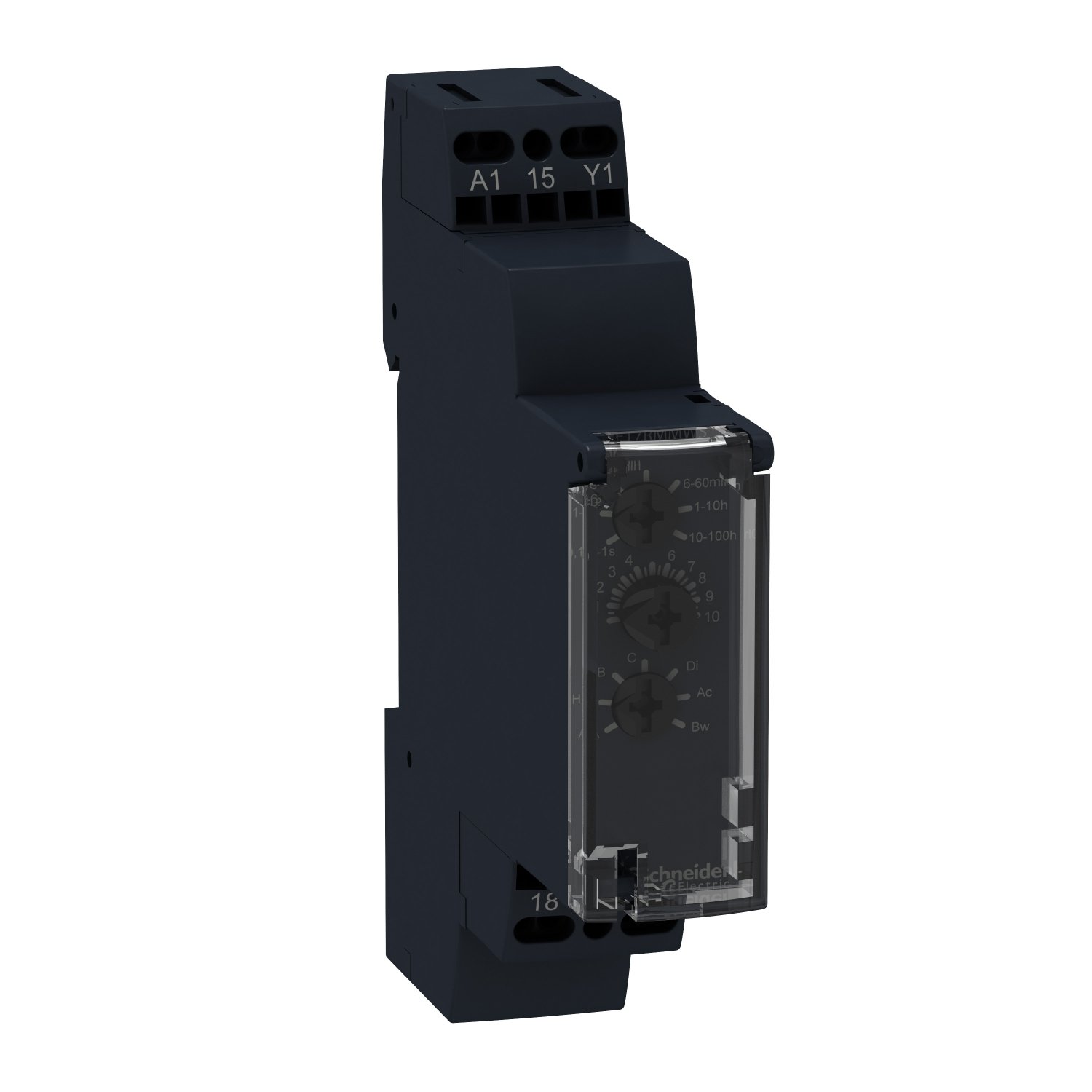
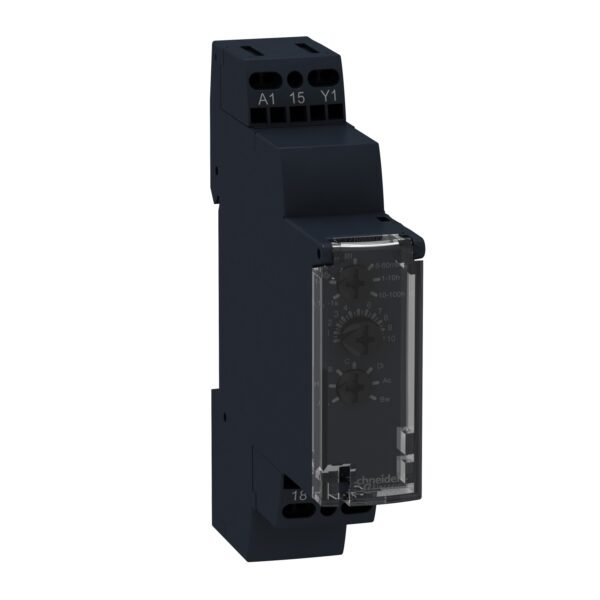
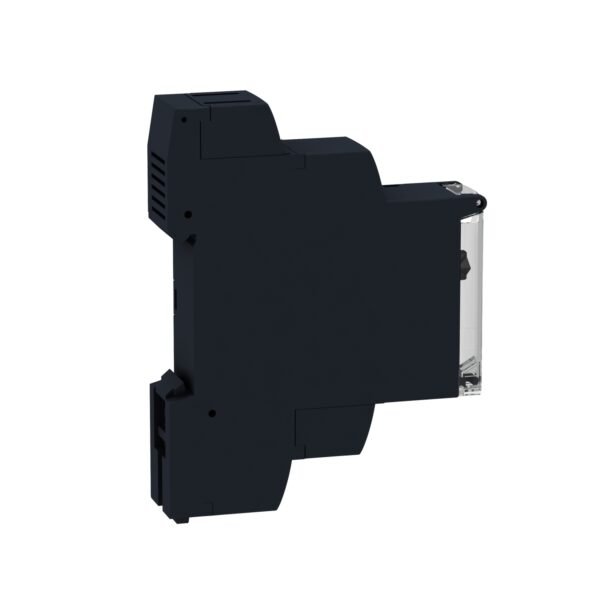
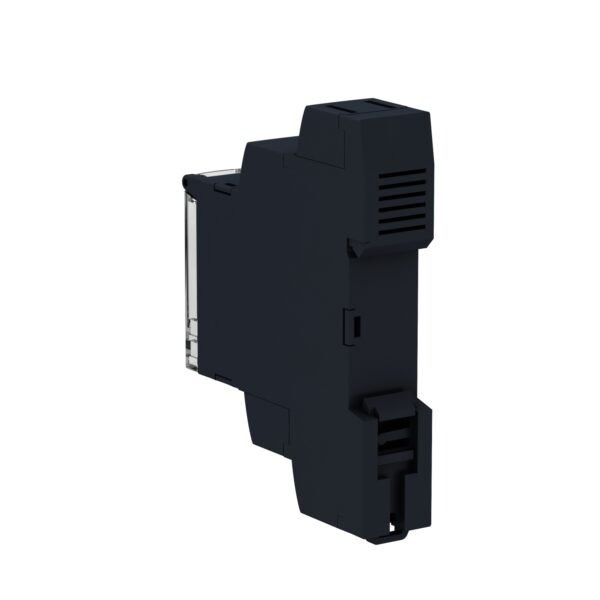
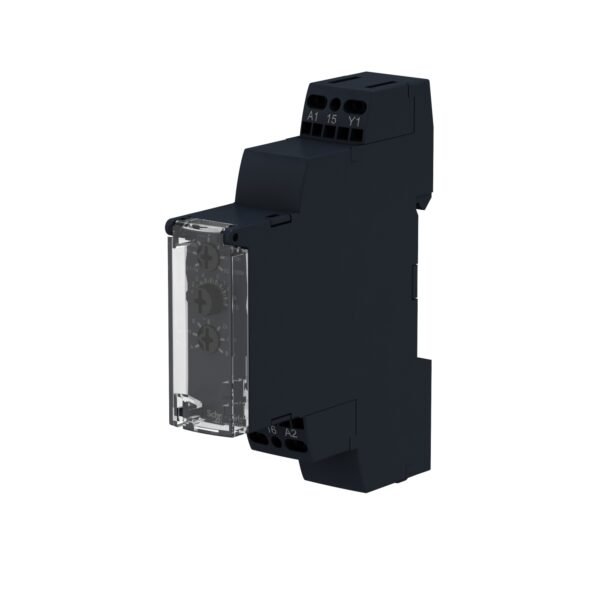
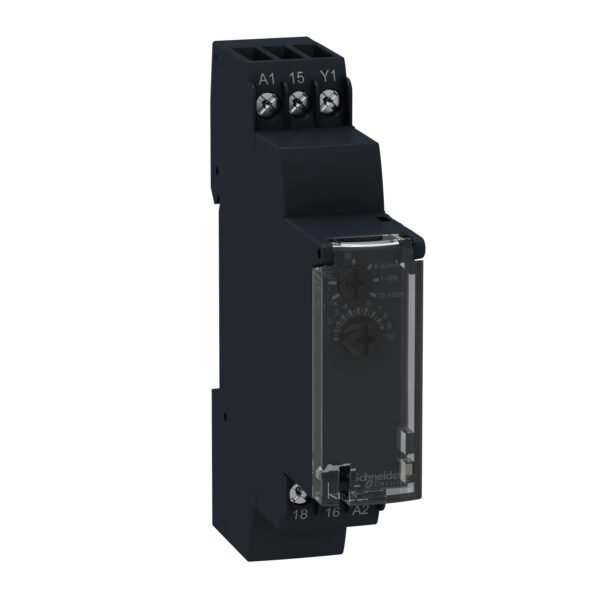
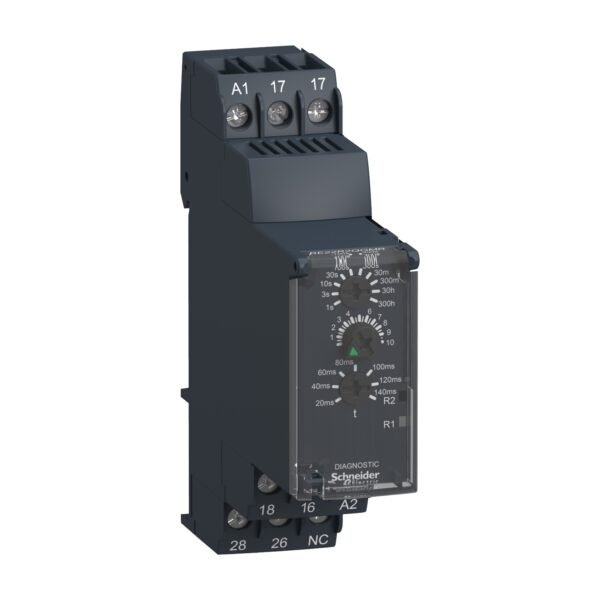
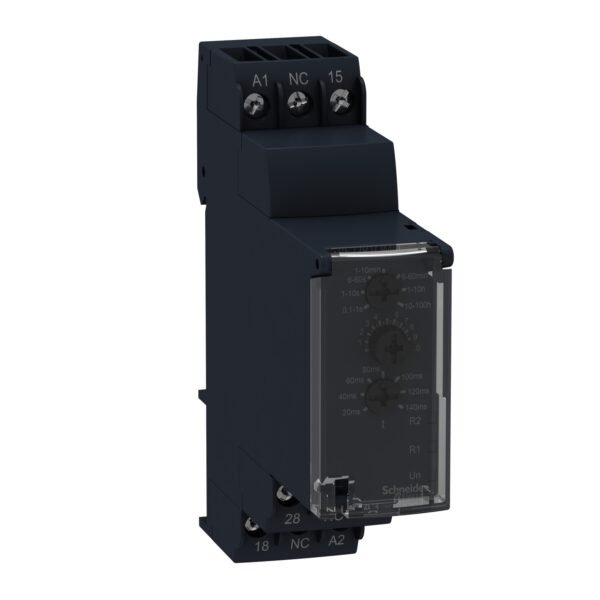
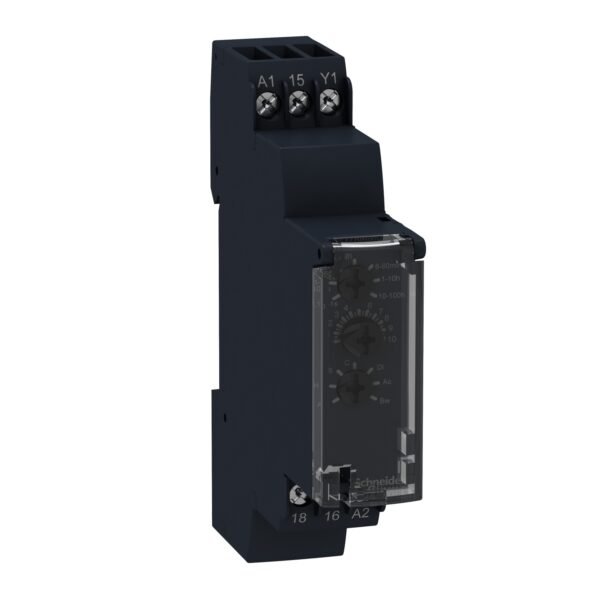
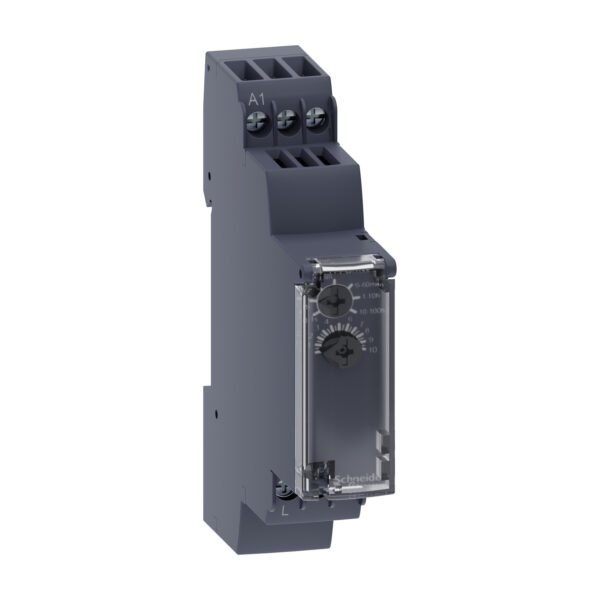
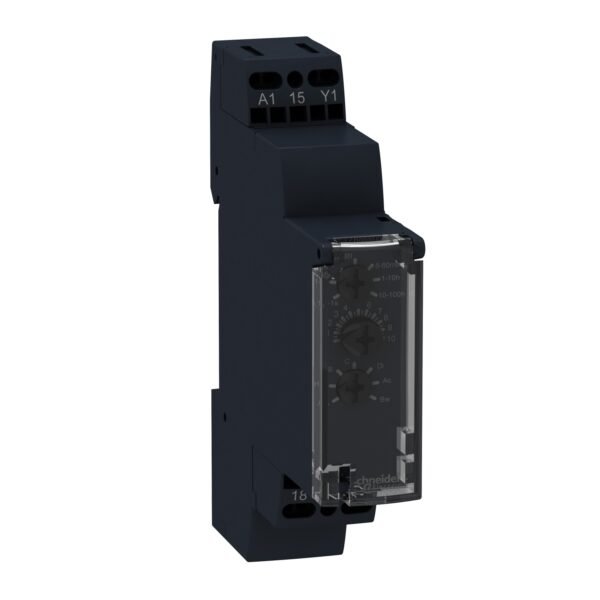
Schneider RE17RMJU | Time delay relay 10 functions – 1 s..100 h – 12 V AC/DC – 1 OC

Introduction Time delay relays play a crucial role in various industrial and commercial applications, offering precise control over timing functions. Understanding their features and applications can enhance operational efficiency and safety in electrical systems.

Functions Time delay relays like the Schneider RE17RMJU are designed with 10 key functions, ranging from 1 second to 100 hours. These functions include delay on, delay off, interval, pulse shaping, and more. Each function serves specific timing needs in different scenarios.

Specifications The Schneider RE17RMJU time delay relay operates at 12 V AC/DC and offers versatile timing ranges from 1 second to 100 hours. It features 1 open contact (OC) for switching applications, making it suitable for a wide range of control tasks.

Applications These relays find extensive use in industrial automation, HVAC systems, lighting controls, motor controls, and process timing applications. Their ability to provide precise timing functions ensures seamless operation and optimized performance in diverse settings.

Installation Installing a time delay relay like the Schneider RE17RMJU involves several steps. Begin by identifying the appropriate mounting location and ensuring proper electrical connections. Follow manufacturer guidelines and safety protocols during installation to avoid any mishaps.

Testing After installation, it’s crucial to test the relay to verify its functionality and timing accuracy. Use a multimeter or testing device to check the relay’s response to different input signals and time settings. Adjustments may be necessary to fine-tune the relay for specific requirements.

Maintenance Regular maintenance is key to ensuring the longevity and reliability of time delay relays. Keep the relay clean and free from dust or debris that could affect its performance. Periodic inspections and testing can help detect any issues early on and prevent downtime.

Conclusion Time delay relays like the Schneider RE17RMJU offer precise timing control essential for various industrial and commercial operations. Understanding their functions, specifications, and applications can help businesses improve efficiency and streamline processes.

FAQs

  1. What is a time delay relay used for? A time delay relay is used to control the timing of electrical processes, providing delays between the initiation of an action and its response.
  2. How do I choose the right time delay relay for my application? Consider factors such as voltage requirements, timing range, contact type, and specific functions needed for your application to choose the right time delay relay.
  3. Can time delay relays be used in automotive applications? Yes, time delay relays find applications in automotive systems for functions like delayed lighting, wiper control, and more.
  4. Are time delay relays user-programmable? Some time delay relays offer programmable features, allowing users to customize timing parameters based on their requirements.
  5. What safety precautions should I take when working with time delay relays? Always follow manufacturer instructions, disconnect power before installation or maintenance, and use proper protective gear to ensure safety when working with electrical components.

Additional information

brands

Schneider Electric

Specifications

Main
Range of product Harmony Timer Relays
Discrete output type Relay
Product or component type Modular timing relay
Width 17.5 mm
Device short name RE17R
Time delay type Power on-delay On-delay and off-delay Interval Off-delay Symmetrical flashing
Time delay range 1...10 s 6...60 s 10...100 h 1...10 min 1...10 h 0.1...1 s 6...60 min
Nominal output current 8 A
Complementary
Contacts type and composition 1 C/O
Contacts material Cadmium free
Height 90 mm
Depth 72 mm
Control type Selector switch front panel
[Us] rated supply voltage 12 V AC/DC 50/60 Hz
Voltage range 0.9...1.2 Us
Supply frequency 50...60 Hz +/- 5 %
release of input voltage 5 V
Connections - terminals Screw terminals, 1 x 0.5...1 x 3.3 mm² (AWG 20...AWG 12) solid without cable end Screw terminals, 2 x 0.5...2 x 2.5 mm² (AWG 20...AWG 14) solid without cable end Screw terminals, 1 x 0.2...1 x 2.5 mm² (AWG 24...AWG 14) flexible with cable end Screw terminals, 2 x 0.2...2 x 1.5 mm² (AWG 24...AWG 16) flexible with cable end
Tightening torque 0.6…1 N.m conforming to IEC 60947-1
Housing material Self-extinguishing
Repeat accuracy +/- 0.5 % conforming to IEC 61812-1
Temperature drift +/- 0.05 %/°C
Voltage drift +/- 0.2 %/V
Setting accuracy of time delay +/- 10 % of full scale at 25 °C conforming to IEC 61812-1
Time delay type Power on-delay - A- Power on-delay relay On-delay and off-delay - Ac- On-delay and off-delay relay w/ control signal Power on-delay - At- Power on-delay relay w/ pause/summation (Y1) Interval - B- Single interval relay w/ control signal Interval - Bw- Double interval relay w/ control signal Off-delay - C- Off-delay relay w/ control signal Symmetrical flashing - D- Symmetrical flashing relay (starting pulse-off) Symmetrical flashing - Di- Symmetrical flashing relay (starting pulse-on) Interval - H- Interval relay Interval - Ht- Interval relay w/ pause/summation (Y1)
control signal pulse width 100 ms with load in parallel typical 30 ms typical
Insulation resistance 100 MOhm at 500 V DC conforming to IEC 60664-1
Reset time 120 ms on de-energisation typical
On-load factor 100 %
Power consumption in VA 0…0.7 VA at 12 V AC
Maximum power consumption in W 0.5 W at 12 V DC
Minimum switching current 10 mA at 5 V DC
Maximum switching current 8 A AC/DC
Maximum switching voltage 250 V AC
Breaking capacity 2000 VA
operating frequency 10 Hz
Electrical durability 100000 cycles (8 A at 250 V AC maximum) for resistive load
Mechanical durability 10000000 cycles
Dielectric strength 2.5 kV 1 mA/1 minute 50 Hz conforming to IEC 61812-1
[Uimp] rated impulse withstand voltage 5 kV during 1.2/50 µs
power on delay 100 ms
Marking CE
Creepage distance 4 kV/3 conforming to IEC 60664-1
Safety reliability data MTTFd = 296.8 years B10d = 270000
Mounting position Any position in relation to normal vertical mounting plane
Mounting support 35 mm DIN rail conforming to IEC 60715
Local signalling LED indicator for on steady: relay energised, no timing in progress LED indicator for flashing: timing in progress 80 % ON and 20 % OFF LED indicator for pulsing: relay de-energised, no timing in progress (except function Di-D, Li-L) 5 % ON and 95 % OFF
Function available A- Power on-delay relay-1 C/O Ac- On-delay and off-delay relay w/ control signal-1 C/O At- Power on-delay relay w/ pause/summation (Y1)-1 C/O B- Single interval relay w/ control signal-1 C/O Bw- Double interval relay w/ control signal-1 C/O C- Off-delay relay w/ control signal-1 C/O D- Symmetrical flashing relay (starting pulse-off)-1 C/O Di- Symmetrical flashing relay (starting pulse-on)-1 C/O H- Interval relay-1 C/O Ht- Interval relay w/ pause/summation (Y1)-1 C/O
Net weight 0.07 kg
Control type Without test button
Number of functions 10
Time delay type A, Ac, At, B, Bw, C, D, Di, H, Ht
Functionality Multifunction
Compatibility code RE17
Environment
Immunity to microbreaks 20 ms
Standards 2006/95/EC 2004/108/EC IEC 61000-6-4 IEC 61000-6-1 IEC 61000-6-3 IEC 61812-1 IEC 61000-6-2
Product certifications CSA GL cULus
Ambient air temperature for storage -30…60 °C
Ambient air temperature for operation -20…60 °C
IP degree of protection IP20 (terminal block) conforming to IEC 60529 IP40 (housing) conforming to IEC 60529 IP50 (front panel) conforming to IEC 60529
Vibration resistance 20 m/s² (f= 10…150 Hz) conforming to IEC 60068-2-6
Shock resistance 15 gn for 11 ms conforming to IEC 60068-2-27
Relative humidity 93 % without condensation conforming to IEC 60068-2-30
Electromagnetic compatibility Electrostatic discharge immunity test: (in contact), level 3, 6 kV, conforming to IEC 61000-4-2 Electrostatic discharge immunity test: (in air), level 3, 8 kV, conforming to IEC 61000-4-2 Susceptibility to electromagnetic fields: (80 MHz to 1 GHz), level 3, 10 V/m, conforming to IEC 61000-4-3 Electrical fast transient/burst immunity test: (capacitive connecting clip), level 3, 1 kV, conforming to IEC 61000-4-4 Electrical fast transient/burst immunity test: (direct), level 3, 2 kV, conforming to IEC 61000-4-4 1.2/50 µs shock waves immunity test: (differential mode), level 3, 1 kV, conforming to IEC 61000-4-5 1.2/50 µs shock waves immunity test: (common mode), level 3, 2 kV, conforming to IEC 61000-4-5 Conducted RF disturbances: (0.15...80 MHz), level 3, 10 V, conforming to IEC 61000-4-6 Voltage dips and interruptions immunity test: (1 cycle), 0 %, conforming to IEC 61000-4-11 Voltage dips and interruptions immunity test: (25/30 cycles), 70 %, conforming to IEC 61000-4-11 Conducted and radiated emissions: , class B, conforming to EN 55022
Packing Units
Unit Type of Package 1 PCE
Number of Units in Package 1 1
Package 1 Height 2.8 cm
Package 1 Width 8.0 cm
Package 1 Length 9.8 cm
Package 1 Weight 80.0 g
Unit Type of Package 2 S02
Number of Units in Package 2 40
Package 2 Height 15.0 cm
Package 2 Width 30.0 cm
Package 2 Length 40.0 cm
Package 2 Weight 3.475 kg

Main documents

Main documents

Datasheet Download Datasheet
Product datasheet Download
Instruction sheet
Download
Catalog Download
Environmental disclosure
Download
CAD Files Download

Main documents

Datasheet Download Datasheet
Product datasheet Download
Instruction sheet
Download
Catalog Download
Environmental disclosure
Download
CAD Files Download

Reviews (0)

Be the first to review “Schneider RE17RMJU | Time delay relay 10 functions – 1 s..100 h – 12 V AC/DC – 1 OC”

Your email address will not be published. Required fields are marked *

Reviews

There are no reviews yet.

Product was successfully added to your cart!

Select at least 2 products
to compare